
As the only piece of equipment you use on every single shot, the golf ball is crucial to your success as a golfer. It’s important to play a quality ball that suits your swing and your style of play.
When it comes down to it, it’s tough to narrow down a golf ball that would suit all high handicappers. This is because every high handicapper is unique with different swing speeds, trajectories, and goals.
Generally speaking, most high handicappers have slower swing speeds and could use some help getting the ball in the air; their golf ball should be designed to accommodate this. But there are some high handicappers in the opposite camp.
The sheer number of options on the market can make the process of choosing the best golf ball for you difficult and overwhelming. Fortunately, you’ve come to the right place.
In this guide, we’ll review and compare our picks for the best golf balls for high handicappers across a range of different brands.
Note: Golfstead has tested and/or conducted in-depth research into all of the products featured in this guide. Our editorial process for these rankings takes into account a mix of many factors which may include performance, reliability, usability, value for money, cost, and the general consensus from other users of the product. The list that follows may be reassessed or updated over time.
Our Top Picks For Golf Balls For High Handicappers
Based on our own testing, research, and experience, here are our top selections:
- Callaway Supersoft Golf Ball
- TaylorMade Distance+ Golf Ball
- Wilson Duo Soft Golf Ball
- Vice Pro Air Golf Ball
- Bridgestone e12 Straight Golf Ball
- Srixon Z-STAR 9 Golf Ball
- Callaway Supersoft MAX Golf Ball
- OnCore Avant 55 Golf Ball
Note: Prices for the items listed on this page are subject to change. To see the current price, please click on the relevant links below.
1. Callaway Supersoft Golf Ball

The Callaway Supersoft has been an extremely popular golf ball for many years, and for good reason. It has soft feel with a low compression rating of 38, allowing many high handicappers with slower swing speeds to compress the ball and generate high ball speed.
But the Supersoft isn’t just soft; it’s also fast, durable, and generates high launch and low long-game spin, all while maintaining excellent spin control around the greens.
High handicappers often struggle with hooks and slices, and the relatively low spin of the Supersoft will help take the edge off those bad shots.
The 2025 Supersoft has a two-piece construction consisting of:
- a HyperElastic SoftFast Core designed to enhance ball speeds while avoiding a firmer feel around the greens
- a refined Hybrid Cover that provides a durable, soft feel, increased distance, and maximized contact with the clubhead for improved wedge and approach iron control
In addition, HEX Aerodynamics reduce drag and increase lift for more carry, distance, and stopping power into greens.
The Supersoft golf ball has stellar ratings on the Callaway store. We love its length off the tee, performance around the greens, and affordability compared to other balls. The ball is available in an array of colours and print patterns.
2. TaylorMade Distance+ Golf Ball

TaylorMade’s Distance+ golf ball is all about speed. It’s suitable for a wide range of golfers including high handicappers, and it has a high average rating of 4.9/5 (96% recommended) on the TaylorMade store.
The Distance+ has a medium compression rating of 77. However, its soft REACT Speed Core is engineered for easy compression, so slower swing speed players shouldn’t have trouble achieving optimal energy transfer at impact.
The two-piece construction consists of the REACT core and a soft ionomer cover. This cover keeps spin down in the long game and has enhanced durability with resistance to scuffing and shearing.
Other features of the Distance+ are:
- a new Extended Flight 322 Dimple Pattern that is designed to minimize drag and keep the ball in the air for maximum carry
- a new Plus Alignment Aid that helps you line up putts and aim off of the tee while squaring the clubface
This ball delivers tons of distance on all shots, yet it still provides a nice amount of spin and control around the greens. We love how it provides a similar level of performance to high-end balls at a much lower cost.
3. Wilson Duo Soft Golf Ball

Another one of the best golf ball brands out there today is Wilson. Their Duo Soft golf ball, formerly known as the Duo Soft+, is dubbed “the world’s softest golf ball” and is an excellent option for high handicappers who want more distance, accuracy and consistency.
Updated for 2025, the two-piece ball has a low compression rating of 37, which is slightly lower than the 40 of the 2023 model and perhaps even easier for slower swing speeds to compress at impact. Features include:
- an ionomer (Surlyn) cover that helps reduce spin on longer shots
- a new dimple pattern that promotes a flatter flight with a higher peak trajectory
- a high-energy core that minimizes long-game spin and delivers more carry than previous iterations of the Duo Soft
In addition to being offered in six colours and two stripe designs, the Wilson Duo Soft ball is also available with optional printed logos of an NFL team of your choice. These specially designed balls are more expensive than the plain variant.
Golfers love the good distance, affordability, durability, superb feel from tee to green, and impressive spin around the greens considering it has an ionomer cover.
4. Vice Pro Air Golf Ball

Vice Golf is a fairly new company to come onto the scene. It was founded in Germany in 2012 as a maker of high-quality golf balls, and it entered the U.S. market in 2015.
A gold-medal winner on the 2024 Golf Digest Hot List, the Pro Air ball replaces Vice’s previous Pro Soft model and is aimed towards golfers with slow to moderate swing speeds.
With a compression rating of 75, the Vice Pro Air produces the lowest spin in the Vice Pro family for exceptional distance off the tee. At the same time, the ball has a soft feel and has been engineered for a high launch angle, thus maintaining great control around the greens.
The Pro Air has a three-piece construction consisting of:
- a thin cast urethane cover designed for control and short game spin
- a zinc thermoplastic Surlyn mantle that minimizes long game spin
- a High Energy Speed Core (HESC) designed to optimize distance and enhance feel at slower swing speeds
Other features of the Pro Air are:
- a 318 large dimple design that promotes a stable ball flight
- a tapered alignment aid
Compared to the Pro Soft model, the Pro Air is designed to more efficiently activate its layers for lower long game spin and higher launch with mid and short irons.
In our experience, this ball delivers similar long-game distance as the Pro Soft, but with the potential for a little bit more control and stopping power on approach. With its soft feel, it’s also just as accessible to high handicappers as the Pro Soft despite the higher compression rating.
5. Bridgestone e12 Straight Golf Ball

We simply can’t go without including Bridgestone, a world-renowned golf ball manufacturer. They are represented by some of the best golfers in the world including Tiger Woods, Bryson DeChambeau, Fred Couples and Lexi Thompson.
Their e12 Straight ball is similar to the e12 CONTACT model, which is extremely popular and has wide appeal.
What makes it particularly appealing to high handicappers is its sidespin-reducing properties which mitigate slices and hooks as part of an ‘Optimal Flight System’. And with a low compression, it can accommodate slower swingers nicely.
The e12 Straight has a three-piece construction consisting of:
- a FLEXATIV Surlyn cover, designed using impact modifiers, which optimizes performance from tee to green
- an Active Acceleration Mantle that helps maximize energy transfer and ball speed
- a polybutadiene core that promotes long, straight distance
A unique Contact Force Dimple pattern increases forgiveness and reduces sidespin. In addition, the e12 Straight ball is printed with a special MindSet graphic that is designed to help you identify your target, visualize your shot path, and focus on the green dot while you take your swing.
The MindSet graphic is cool, but we suspect many golfers won’t find it particularly helpful.
Off the tee, the e12 Straight is long and straight, yet soft. Approach shot controllability, spin, and feel around the greens are all good. It might not be the best choice for a Tour player, but beginners and intermediate players tend to have great success with it.
6. Srixon Z-STAR 9 Golf Ball

We understand that there are many high handicappers out there with faster swing speeds who prefer a higher compression ball. Enter the Z-STAR by Srixon.
Srixon has been well-known as a maker of quality golf balls for decades. Their Z-STAR model enjoys very high ratings from golfers, and it also made the 2025 Golf Digest Hot List.
The Z-STAR is designed for low-spin distance off the tee with a penetrating flight and mid launch, progressively softer feel as you move to the short irons, and exceptional spin, control and accuracy around the greens.
The compression rating of this ball is 88, which is on the high side, and a swing speed of at least 88 mph is recommended to use it.
The 2025 Z-STAR 9 ball has a three-piece construction consisting of:
- a reformulated FastLayer DG Core 2.0 that gradually moves from firm around the edges to soft in the center. The result is optimized feel and approach spin.
- a thin, thermoplastic urethane cover for stopping power around the greens. The latest iteration incorporates Biomass, which is a durable plant-based material that reduces carbon emissions during manufacturing.
- a new Spin Skin+ coating which digs into grooves to increase friction and further increase spin with wedges. The latest iteration uses a slightly stronger urethane paint that better resists dirt and grime.
In addition, a 338 Speed Dimple pattern promotes a penetrating launch and increases lift for maximum carry distance.
The Z-STAR is a premium golf ball that in many ways is comparable to the famous Titleist Pro V1. The distance and short game precision are top notch, and the durability is great.
7. Callaway Supersoft MAX Golf Ball

As the name implies, the Supersoft MAX is a close relative of Callaway’s Supersoft ball featured farther up the page. It’s perfect for many high handicappers due to its slightly larger size compared to a standard golf ball which makes it a little easier to hit.
Callaway says the the Supersoft MAX is their longest ball for slow swing-speed players, and it has been received very well overall by consumers.
The main difference that sets it apart from the Supersoft is a slightly larger (rule-conforming) diameter of 1.73 inches; this is intended to promote more forgiving contact and increase launch, thereby increasing distance.
The cover of the Supersoft MAX also contributes to a higher launch, lower spin, and increased ball speed.
Aside from this, the ball has a soft compression core (compression rating 30) and HEX Aerodynamics which reduce drag and increase lift.
If you have some trouble making solid contact with the ball, the Supersoft MAX could be an excellent way to go. In our experience, the performance isn’t much different from the Supersoft.
8. OnCore Avant 55 Golf Ball

OnCore is a fairly new, lesser-known golf ball manufacturer that has some really great offerings. Their Avant 55 is a value distance ball aimed at high handicappers who have swing speeds as low as 60 mph.
A silver-medal winner on the 2019 Golf Digest Hot List, this ball has consistently received high ratings from golfers.
The Avant 55 has a low compression rating of just 55. Off the tee, you get a soft feel and a straight, long, stable flight with a higher launch. At the same time, you get a high launch with irons and wedges and a buttery soft feel off the putter face.
The two-piece construction of the Avant 55 consists of a large, soft inner core and a soft Surlyn cover. A 392 dimple pattern optimizes performance from tee to green.
This ball is classified as having a high launch with slightly higher driver spin and wedge spin than OnCore’s other golf ball offerings. A high coefficient of restitution (COR) and high moment of inertia (MOI) result in great ball speeds and forgiveness off the face.
Many people consider the Avant 55 to be just as good as soft balls from name brands, except it’s more affordable. Juniors, beginners, and seniors tend to have the most success with it, and the great thing is that it retains a soft feel even in cold weather.
Buying Guide
There are many golf balls on the market, and knowing which one to choose as a high handicapper isn’t necessarily easy, especially if you’re not sure what to look for. This guide will provide you with the education you need in that regard.
In general, you want a golf ball that facilitates distance off the tee and that is also controllable and can spin around the greens.
If you want to find the right golf ball, here are the most important factors to consider:
1. Compression
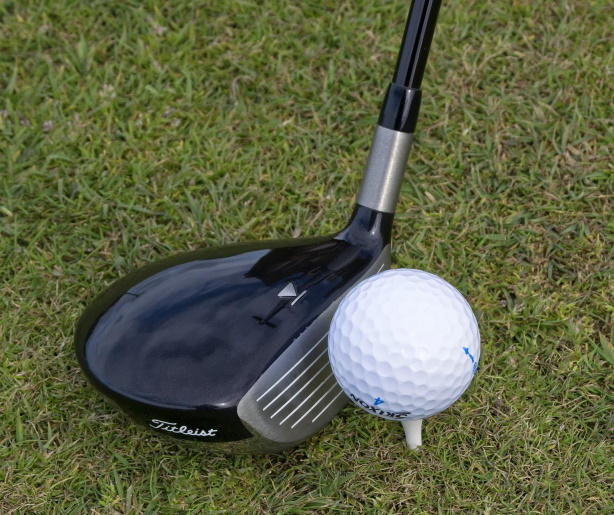
The ability of a golf ball to compress is very important. This is quantified in something called the compression rating, and it usually ranges from around 30 to 120.
The lower the compression rating, the less club head speed is required to sufficiently compress the ball to produce a “rebound” affect that leads to more distance. Conversely, a high compression rating will require a higher club head speed to achieve sufficient compression of the ball.
A general rule of thumb is that a golfer should have a swing speed as close as possible to X mph to hit a ball with a compression rating of X. But this is often not accurate; for example, a ball might have a fairly low compression rating of 60 but be designed for higher swing speeds of around 100 mph. Cold weather can also affect the compressibility of a ball.
Many high handicappers have slower swing speeds of 90 mph or less, and thus could benefit from a “soft” ball with a lower compression rating. This is why most of the balls featured on this page have these characteristics.
However, some high handicappers have higher driver swing speeds and would benefit from a higher compression golf ball such as the Srixon Z-STAR. We have featured some balls that might accommodate this type of golfer as well.
2. Cover
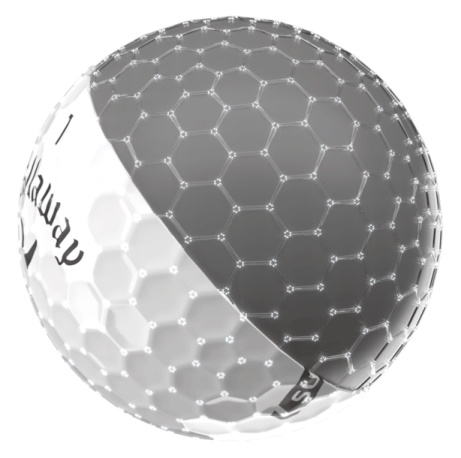
The cover material of a golf ball can have a major impact on its performance. There are two main types of covers: Surlyn and urethane. Some people might consider ionomer, which includes Surlyn, as another type.
Generally, golf balls with ionomer or Surlyn covers are more durable, spin less, and fly a little farther. They also tend to be cheaper.
Golf balls with urethane covers generally spin more, provide a softer, more premium feel, and offer greater control and spin with the shorter irons.
Although this is the generalization, recent advancements in technology have helped urethane covers gain nearly all of the benefits of Surlyn covers. Today, the main drawback of urethane is a higher price and possibly less distance off the tee for slower swingers.
Typically, high handicappers will be better suited to play balls with a Surlyn or ionomer cover because of the need for more distance off the tee.
3. Colours
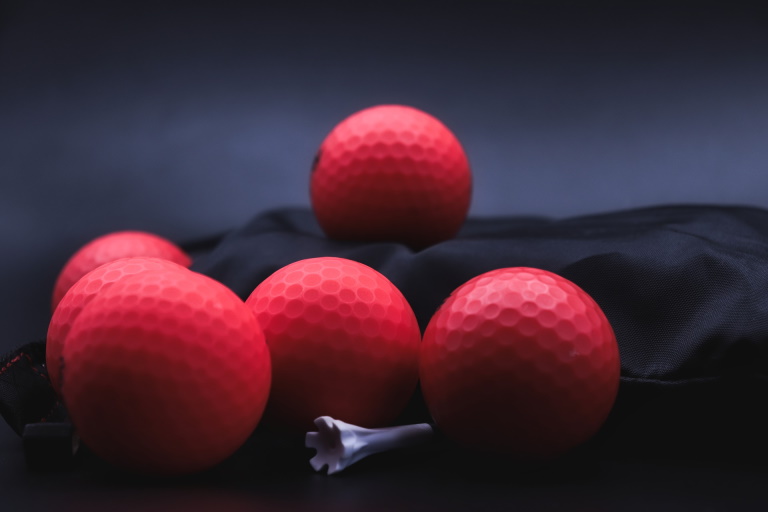
Something many people might not think about is the colour of the golf ball. A lot of golfers will automatically reach for the white ball, but as it turns out, that’s not necessarily the best option.
This is where high-visibility golf balls come in. These balls are exactly the same as the standard white ball but come in a variety of colours including green, yellow, and orange.
Beyond providing an aesthetic flare that might suit your personality, the main purpose of coloured golf balls is to make it easier to not only keep track of the ball while it’s in the air, but also to spot the ball wherever it rests on the course.
In our experience, orange balls work very well for sunny, cloudless conditions during daytime, yellow balls work well in lower-light conditions, and green balls work well in overcast conditions.
It’s definitely worth checking if whichever model of golf ball you’re interested in is also available in high-visibility colours.
It’s certainly fine to just play a white ball if you want, but coloured balls can make your life a little easier, particularly if you have vision problems or if you’re a high handicapper that tends to hit it all over the place.
4. Dimples
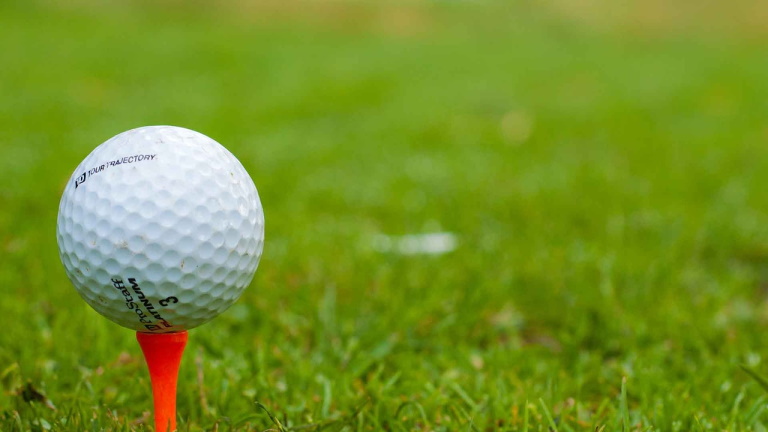
We definitely don’t recommend choosing a golf ball based on its dimples alone, but it’s worth knowing what their purpose is.
Most modern golf balls have between 300 and 400 dimples. Although golf ball manufacturers have their own ways of dimpling their balls, the goal is the same: to reduce drag and increase lift resulting in more distance.
Dimples are essential in order to get the aerodynamic performance expected from golf balls today, as opposed to smooth balls.
Beyond the number, dimples can also have difference shapes (such as spherical or hexagonal) and be arranged in different patterns.
It’s difficult if not impossible for the average golfer to predict the ultimate effect of a specific dimple configuration, so your best bet is to look at what the brand says about the dimples of a particular golf ball and consider if it matches the needs of your own game.
5. Price
Of course, price is very important when shopping for a golf ball.
Many people dislike spending $50 or more for a dozen golf balls, and that’s completely understandable. Fortunately, high handicappers may play just as good if not better with cheaper balls that cost under $30 a dozen.
Cheaper golf balls may have a simpler construction, have a firmer feel, have sub-optimal energy transfer, or have generally inferior performance, but this is far from set in stone. In this guide, we’ve tried to include quality golf balls over a range of budgets that golfers might have.
Don’t forget that instead of buying new, you could save even more money by buying recycled balls on places like eBay. We recommend only looking at balls with condition ratings of AAA or above.
Conclusion
Golf woods and irons are one thing, but the golf ball you use can make a surprisingly big difference as to how well you play on the course.
In the case of high handicappers, the general rule is that they have slower swing speeds and need help with launch and distance. For this reason, they tend to perform best with softer, low-compression balls built for distance rather than shotmaking precision.
Of course, not all high handicappers fall into this category, and hence some may do well with a higher-compression Tour ball.
In any case, a golf ball that suits your game is a huge asset. And finding one that you like is actually pretty easy with a bit of knowledge and experimentation. We suggest trying several of the balls featured on this page and seeing which one performs best for you.
Each of the golf ball models listed above deliver exceptional performance for the cost. We’ve given you the information you need; now it’s up to you to go the rest of the way.
It’s also very beneficial to read customer reviews to acquire some useful insights as to how golf balls actually perform. This will help you a great deal in the decision-making process.
Thanks for reading this guide. Which golf ball are you interested in as a high handicapper? Do you have any questions? Feel free to leave a comment down below.
The post 8 Best Golf Balls For High Handicappers – 2026 Reviews & Buying Guide appeared first on Golfstead.
Learn More About Golf
If you want to learn more about golf, check out these other helpful resources!
- 7 Best Golf Balls For High Swing Speeds – 2026 Reviews & Buying Guide
- Best Game-Improvement Drivers of 2015 (Updated)
- Golf Takeaway Drills & Tips – Start Off The Right Way

- 6 Best Golf Simulator Impact Screens – 2026 Reviews & Buying Guide
- 7 Best Golf Launch Monitor Apps – Understand Your Game Better
- Titleist GT4 Driver Review – Aggressive Spin Reduction

Popular Buying Guides