
Your ability to hit the ball solidly off the tee, send it a long way, and (hopefully) find the fairway is essential to your success as a golfer.
As a beginner, you’re still learning how to make decent contact with the ball, and with the driver, this can be very challenging initially. Thus, generally speaking, most beginners will benefit greatly from a large, forgiving face, high launch properties, and a draw bias to correct slices.
Also, because beginners are building up their golf muscles and often have a slower swing speed, they tend to benefit from lightweight configurations that enable an easier, faster swing.
However, there are countless options on the market, which can make the process of choosing the best driver for you feel difficult and overwhelming. Fortunately, you’ve come to the right place.
In this guide, we’ll review and compare our picks for the best golf drivers for beginners across a range of different brands. These drivers may have been released for the most current golf season or any year prior.
Note: Golfstead has tested and/or conducted in-depth research into all of the products featured in this guide. Our editorial process for these rankings takes into account a mix of many factors which may include performance, reliability, usability, value for money, cost, and the general consensus from other users of the product. The list that follows may be reassessed or updated over time. We do not guarantee that other users will have the same or similar experience with the products as described on this page.
Our Top Picks For Drivers For Beginners
Based on our own testing, research, and experience, here are our top selections:
- Cobra 2024 AIR-X Straight Neck Driver
- Callaway Elyte Max Fast Driver
- TaylorMade SIM2 Max Driver
- PING G440 SFT Driver
- Titleist GT1 Driver
- TaylorMade Stealth 2 HD Driver
- Srixon ZXi Driver
- COOLO ND-460 Driver
Note: Prices for the items listed on this page are subject to change. To see the current price, please click on the relevant links below.
1. Cobra 2024 AIR-X Straight Neck Driver
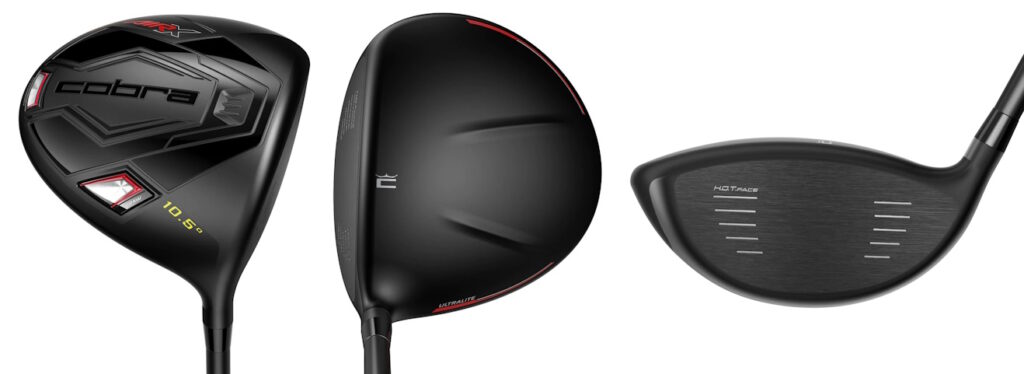
With the AIR-X, you’re getting a highly praised lightweight offering for slower swingers made by a reputable name brand (Cobra) at a reasonably affordable price. These things together are why it earns the #1 spot on our list.
Not only does the stock shaft and grip have light weight in mind, but the driver itself has a lightweight construction which helps promote a faster, more effortless swing.
In addition to the extremely lightweight design at just 290g, the AIR-X driver is also engineered for fast ball speeds across the face and a draw bias. The 2024 model of the AIR-X (AIR-X 2) improves upon the original 2022 version with new H.O.T. Face technology designed to give a boost to mis-hit forgiveness.
The key features of the 2024 AIR-X Straight Neck driver are:
- a lightweight construction consisting of a lightweight head, shaft and grip
- an A.I. H.O.T. Face that better optimizes spin and increases ball speeds across the face
- heel weighting to help mitigate slices
- no offset for a traditional look at address
The 2024 AIR-X Straight Neck driver comes stock with the Cobra Ultralite 40 graphite shaft, and the stock grip is the Lamkin EPDM R.E.L. Black STD 58R.
| Lofts | 9.5°, 10.5° |
| Lie | 61° |
| Length | 46″ |
| Swing Weight | D1.5 |
Pros
- great distance and accuracy
- effortless feel throughout the swing
- easy to get the ball airborne
- healthy draw bias for fighting slices
Cons
- might be too light for some
Final Thoughts
The Cobra 2024 AIR-X Straight Neck is a nice straightforward driver. Its light weight makes it ideal for beginners who are just starting to build up their golfing muscles, and its launch, distance and forgiveness are better than most other lightweight drivers.
With the 2024 model, Cobra essentially brought in the H.O.T. Face technology found in their AEROJET driver. This gives a nice little boost to ball speeds across the face compared to the original AIR-X.
There’s also an Offset variant of the 2024 AIR-X which provides even more draw bias.
2. Callaway Elyte Max Fast Driver

Callaway is a top golf equipment brand that has developed high-performing drivers for decades and boasts a number of high-profile pro golfers as ambassadors.
Their Elyte Max Fast driver is marked by a lightweight design which helps many beginners generate more clubhead speed and distance off the tee. This is supplemented by high MOI and a stretched profile at address.
The driver has an excellent customer score of 4.6/5 on the Callaway store and won a gold medal on the 2025 Golf Digest Hot List. Its key features are:
- Ai 10x Face: replacing the Ai Smart Face found in previous Callaway drivers, this face technology delivers 10 times more control points, further enhancing performance across the face. The results is higher ball speeds, tighter dispersions, and better optimized spin and launch.
- Thermoforged Carbon Crown: a new aerospace-grade carbon fiber crown allows the center of gravity (CG) to be positioned optimally for low spin and high launch. It also works with the unique shape of the driver to deliver unprecedented speed and distance.
- Elyte Shape: a new aerodynamic shape, developed through advanced prototyping, consists of a lower heel section and lower crown profile. It’s designed to minimize air resistance and maximize speed through the entire swing.
- Discrete Weighting System: a new discrete perimeter weighting system (neutral and draw positions) with a movable weight.
- Lightweight Design: in addition to a lightweight stock shaft (40g) and lightweight grip (25g), the driver has a carbon sole construction which saves weight in the clubhead.
The stock graphite shaft is the Mitsubishi VANQUISH PL 40 (light flex), and the stock grip is the Winn Dri-Tac 2.0 Lite. Custom options are available.
| Lofts | 10.5°, 12° |
| Lie | 59° |
| Length | 45.75″ |
| Hand | RH/LH |
Pros
- slower swingers can realize big distance gains
- forgiving with easy launch
- easy to swing
- attractive aesthetic
- a lot of adjustability
- responsive feel
Cons
- slightly less forgiving than the Elyte X
- expensive like most name-brand drivers
Final Thoughts
There’s no question that the Callaway Elyte Max Fast driver will be a game-changer for many beginners when it comes to getting the ball airborne and maximizing speed and carry.
Whether it’s an easy launch, fast ball speeds, great forgiveness, a sleek aesthetic, or a responsive feel, the Elyte Max Fast doesn’t drop the ball in any regard.
3. TaylorMade SIM2 Max Driver
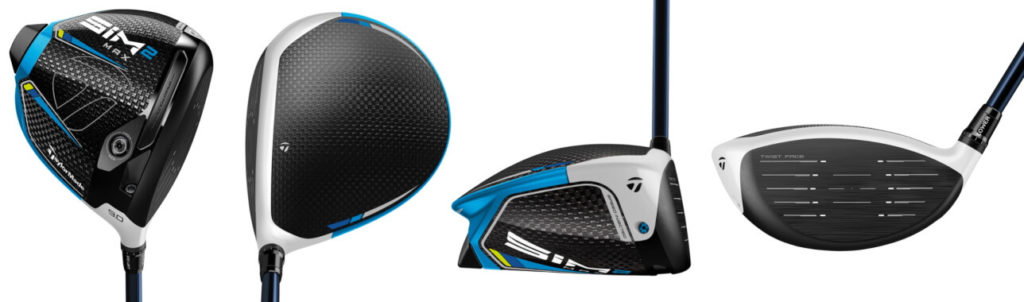
TaylorMade’s SIM2 Max driver is now several seasons old, but we’re including it on this list because of how affordable it is given the performance it offers.
This discounted older-season model is extremely popular at the moment. It’s engineered to deliver big distance, low spin, and high MOI, with a heavier tungsten weight in the back adding additional launch and forgiveness.
The SIM2 Max has an oversized profile with a higher MOI than the standard SIM2. Key features include:
- Forged Ring Construction: lightweight, high-strength aluminum wraps around the back of the club to save weight and greatly improve forgiveness.
- Split Mass Weighting: consisting of a 24g tungsten weight in the rear and a TPS weight on the sole, this allows for precise custom weighting, increased forgiveness, and optimal spin properties.
- Asymmetric Inertia Generator: increases aerodynamic club head speed and shifts the CG back for increased stability.
- Speed-Injected Twist Face: a Twist Face that helps correct off-center hits is combined with injections that bring the speed of the face (COR) up to the legal limit.
- Thru-Slot Speed Pocket: the most flexible Speed Pocket design yet increases sole flexibility, leading to increased ball speed and forgiveness low on the face.
The stock shafts are the Fujikura Ventus Blue and KURO KAGE Silver, and the stock grip is the TM Z600.
| Lofts | 9°, 10.5°, 12° |
| Lie | 56°-60° |
| Length | 45.75″ |
| Swing Weight | D4 |
Pros
- exceptional distance as long as the ball flight isn’t too high
- more forgiving than the SIM2 and SIM Max
- excellent feel with surprisingly distinct feedback
- no major weaknesses
- more affordable than current-season models
Cons
- no 12° loft for left-handed golfers
Final Thoughts
The SIM2 Max is a very stable, comfortable, easy-to-hit driver that should be a top choice for beginners who are learning how to make decent ball contact. It can currently be obtained at a pretty sizeable discount thanks to its age.
The SIM2 Max doesn’t really do anything poorly, and the launch and spin properties will be very generous to golfers who can’t generate the “elite” club head speed of many Tour players.
4. PING G440 SFT Driver

PING is a world-renowned golf equipment manufacturer that was founded in 1959 by Karsten Solheim, a former General Electric engineer. It has been backed by a number of pros including Bubba Watson, Louis Oosthuizen, and Lee Westwood.
The G440 SFT (Straight Flight Technology) is the draw bias option in PING’s G440 line, with a moveable 23g tungsten backweight promoting a right-to-left shot correction of up to 20 yards. Compared to the G430 SFT, the G440 is designed to improve on distance, forgiveness and sound.
The key technologies of the G440 SFT are:
- Carbonfly Wrap Crown: this saves discretionary weight which is reallocated to lower the CG, leading to increased forgiveness and a more muted, pleasant impact sound.
- Free Hosel: weight is removed from a section of the hosel and reallocated to lower the CG to record levels — the result is more distance and forgiveness.
- Low Face: the height of the G440 SFT’s face is lower than previous models, which enables it to be thinner and hotter for higher ball speeds across the face.
- Tungsten Backweight: a 23-gram backweight can be moved into Draw or Draw+ positions for moderate or strong slice correction.
- Trajectory Tuning 2.0 Hosel: this lightweight, aerodynamic, adjustable hosel offers eight loft and lie combinations to fine-tune your trajectory.
There are many stock shaft options offered at no upcharge including the PING Tour 2.0 Chrome 65, Mitsubishi TENSEI 1K Black 65, and Project X Denali Red.
Also available is the G440 SFT High Launch (HL) driver. This custom option combines a lighter backweight with a lighter stock shaft and grip; it’s designed so that golfers with slower swing speeds can boost their clubhead speed and distance.
| Lofts | 9°, 10.5° |
| Lie | 58.5° |
| Length | 46″ |
| Swing Weight | D0 |
Pros
- game-changing slice correction
- forgiveness is excellent
- launch conditions are ideal
- significantly improved sound and feel compared to older models
- can adjust the degree of draw bias
Cons
- look is hit or miss
- very limited workability
Final Thoughts
The PING G440 SFT driver checks all the boxes for the typical beginner: it offers strong slice correction, it’s long, it’s forgiving, and it’s lightweight but not overly so.
On top of this, it’s the best G-series SFT driver yet in terms of forgiveness, launch, and sound.
With PING clubs in particular, we do highly recommend a fitting if possible (after you’ve figured out how to make a half decent swing) so that you know what configuration will work best for you. You also might be able to score a really good deal on eBay.
5. Titleist GT1 Driver

You may think of Titleist as mainly catering to the professional crowd, but this isn’t really true; they also offer plenty more forgiving options that live up to the Titleist standard of quality.
The GT1 has an ultra-lightweight design, allowing golfers with low to moderate swing speeds to generate more speed through the ball and maximize distance. It has the deepest center of gravity (CG) in the GT driver family, resulting in speed, forgiveness, high launch, and mid spin.
The key features of the GT1 driver are:
- Thermoform Crown: this unique composite crown made from a new proprietary matrix polymer saves significant weight in the crown which is reallocated to optimize performance. At the same time, this new crown maintains the sound and feel golfers have come to expect from Titleist.
- Split Mass Construction: the internal weighting of the GT1 focuses mass in two locations: towards and back of the clubhead for increased launch, and forward to achieve an optimal balance of spin, speed and forgiveness.
- Speed Ring VFT Face: this technology combines an upgraded titanium Speed Ring, which stabilizes the perimeter to increase ball speeds in the center of the face, with a variable face thickness (VFT) design that maximizes speed across the entire face.
- Complete Adjustability: an interchangeable back weight that alters swing weight combines with an integrated SureFit hosel that enables sixteen unique loft and lie combinations. This gives you plenty of room to fine-tune your ball flight.
The lightweight stock shaft is the Fujikura Air Speeder, and the stock grip is the Golf Pride Tour Velvet 360 Lite. An array of other featured and premium shafts are also available.
| Lofts | 9°, 10°, 12° |
| Lie | 58.5° |
| Length | 45.50″ |
| Hand | RH/LH |
Pros
- plenty of length and forgiveness
- effortless launch
- surprisingly low spin despite the high launch
- modern, sleek aesthetic
- easy for beginners to swing
Cons
- has a bit of a niche appeal
- expensive
Final Thoughts
The Titleist GT1 driver is an ideal choice for people just starting out in golf because of its light weight and easy launch. And what’s great is that it’s very similar performance and technology-wise to the GT2 and GT3 models.
We should also mention that even if your swing speed is less than 90 mph, you may still have to experiment with the backweight, shaft or hosel adapter or even get a fitting in order to get the most out of this driver.
6. TaylorMade Stealth 2 HD Driver
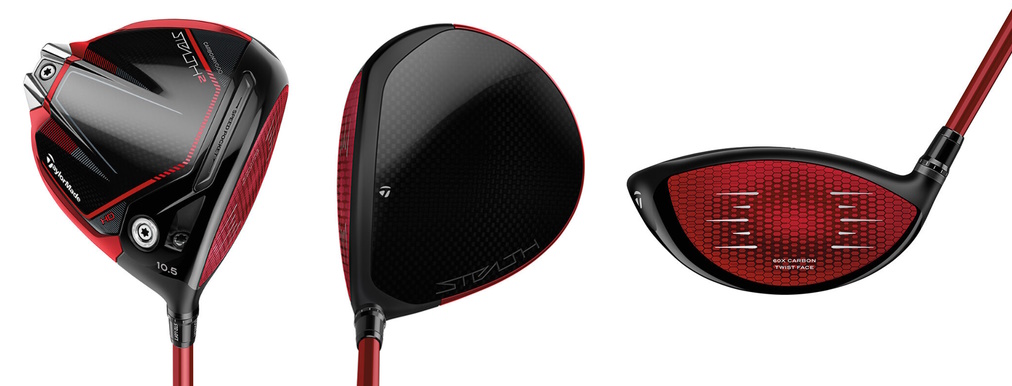
TaylorMade is a top golf equipment brand that has developed high-performing drivers for decades.
Their Stealth 2 HD driver features the same improved Carbon Twist Face and carbon-focused construction of the standard Stealth 2, but the Inertia Generator and center of gravity are shifted towards the heel, producing a draw bias that will help fight a slice.
The driver is the highest-launching and most forgiving model in the Stealth 2 line, and it has nearly double the amount of carbon in its construction compared to the original Stealth HD.
Key technologies are:
- New 60X Carbon Twist Face: ball speed and forgiveness on off-center strikes is improved with an enhanced version of Inverted Cone Technology (ICT), and the face is slightly lighter
- Carbon Reinforced Composite Ring: this runs around the head of the driver, allowing for weight savings that are used to shift the CG back for higher MOI
- Internal Stiffening Ribs: used to finely tune acoustics for a lively and powerful sound
- Inertia Generator: seen in previous models including the M6, SIM and SIM2, this unique sole shape increases aerodynamic club head speed and shifts the CG back for increased stability
The stock shaft is the Fujikura Speeder NX Red, and the stock grip is the Golf Pride ZGRIP Plus2. An FCT adjustable loft sleeve is included.
| Lofts | 9°, 10.5°, 12° |
| Lie | 58°-62° |
| Length | 45.5″ |
| Swing Weight | D2 |
Pros
- robust draw bias
- uber forgiving
- excellent clubhead speed
- easy to launch
- feel is more muted and sophisticated than the Stealth HD
Cons
- adjustment tool not included
- expected a little more ball speed
Final Thoughts
With the Stealth 2 HD driver, TaylorMade puts their best foot forward.
This driver is long, forgiving, and has superb sound & feel. Because of the draw bias and higher launch, beginner golfers can swing with the confidence that their big stick is giving them the best chance of success.
7. Srixon ZXi Driver

Many people are familiar with Srixon as one of the top manufacturers of golf balls. It turns out that they make excellent drivers too.
Their ZXi driver, which won a gold medal on the 2025 Golf Digest Hot List, is engineered for loads of ball speed, high forgiveness, and ball flight adjustability in a confidence-inspiring footprint.
The ZXi is the balanced “middle” model in the ZXi family of drivers. Key technologies include:
- i-FLEX Face: a new variable face thickness pattern, enabled by a new internal face structure, results in more efficient energy transfer at impact. The thickness of the face in the sweet spot region is thinner than the previous generation for more ball speed.
- Rebound Frame: adds a second layer of flexibility for even more recoil at impact. The “spring within a spring” dual-flex design delivers unprecedented ball speeds, particularly in the middle of the face.
- Star Frame Crown: an internal structure of latticework and ridges allows for an extremely thin titanium crown. This frees up discretionary weight which is redistributed for higher launch and optimal spin.
- Sole Weights: two weight ports in the toe and heel regions of the sole contain adjustable weights (4g and 10g) that can be swapped to introduce draw and fade biases depending on individual preferences.
- Laser Face Milling: this adds roughness to the face, making spin more consistent and improving forgiveness in wet conditions.
- Adjustable Hosel: offers 12 combinations of loft, lie and face angle.
The ZXi driver comes stock with the Fujikura VENTUS TR Blue graphite shaft, and the stock grip is the Golf Pride Tour Velvet 360.
| Lofts | 9°, 10.5° |
| Lie | 59° |
| Length | 45.75″ |
| Swing Weight | D3 |
Pros
- impressive ball speeds
- easy to swing
- improvement in looks over its predecessor
- strong feel off the face
Cons
- only one stock shaft option
- many dislike the loud impact sound
Final Thoughts
The Srixon ZXi driver does a fantastic job of providing balanced game improvement performance. It doesn’t completely put the training wheels on a beginner golfer, but it’s also not too challenging to play like a low-spin driver might be.
Plus, if you struggle with a slice or cut ball flight as a beginner, you can put additional weight in the heel port on the sole to help correct that.
8. COOLO ND-460 Driver

We understand that many beginner golfers aren’t looking to spend hundreds of dollars on a name-brand driver and just want something solid for $100 or less. In that case, we have something really nice for you.
COOLO specifically advertises their ND-460 driver as being geared towards beginners and amateurs. It’s designed to be easy to swing, forgiving, and long, with an alignment aid on the crown for easier setup.
When it comes to features, COOLO has done three main things as part of the engineering of the ND-460:
- optimize the center of gravity to create a draw bias and keep spin down
- optimize the thickness of the face to increase ball speeds and enlarge the sweet spot
- optimize the internal structure of the driver to produce a pleasing impact sound with an explosive feel
| Lofts | 9.5°, 10.5°, 12° |
| Lie | 58° |
| Length | 45.25″ |
| Swing Weight | D2 |
Pros
- very affordable for new players
- forgiving and tries to keep you in the fairway
- feels good in the hands
- fast off the face
Cons
- quality isn’t quite as good as the latest name-brand drivers
- no adjustability
Final Thoughts
We suggest the 10.5° loft for beginners, especially those with clubhead speeds in the 80-90 mph range. If you’re having a hard time getting the ball up in the air, 12° might be a better choice.
You probably haven’t heard of this brand, but at just $99, the ND-460 packs great performance for the cost and has been well-received by golfers in general. Note that the 9.5° driver is not available in LH.
Buying Guide
There are a ton of drivers on the market, and knowing which one to choose as a beginner isn’t necessarily easy, especially if you’re not sure what to look for. This guide will provide you with the education you need in that regard.
In general, beginners should choose a driver that is highly forgiving, easy to swing, and has good all-around performance.
If you want to find the right driver, here are the most important factors to consider:
1. Forgiveness
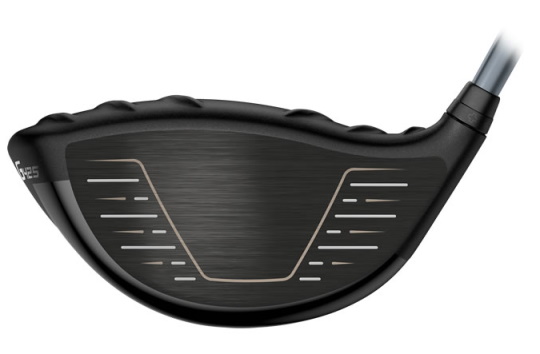
Forgiveness is certainly one of the most important factors to consider, especially for a beginner who often makes poor face contact.
Having a degree of forgiveness in your driver is highly beneficial because at these high swing speeds, minor mis-hits can be amplified into very poor results. It’s important to find the fairway as often as possible.
Forgiveness can be divided into two subtypes: ball speed forgiveness and directional forgiveness.
Ball speed forgiveness refers to the amount of ball speed that is preserved in mis-hit regions (towards the toe or heel) relative to the center of the face. Most modern game improvement drivers strive to maximize speed across the entire face so that even moderate mis-hits might result in only a few yards of lost distance.
Directional forgiveness refers to how far a shot deviates from the target line when struck in mis-hit regions. This is closely related to a quantity called moment of inertia, or MOI.
The higher the MOI, the more the club is resistant to twisting at impact when the ball doesn’t make contact at the center of mass. The more the club (and hence the face) resists twisting at impact, the closer to the target line the ball will start.
Many modern drivers have high MOI as a selling point. This will certainly add stability to your shots and help you find more fairways, but you tend to get slightly reduced distance and higher backspin as a tradeoff.
Closely related to the concept of forgiveness is the flight bias of the driver. Many beginners tend to slice the ball with the driver and would appreciate a draw bias because it helps straighten out their shots.
2. Distance

Of course, every golfer wants more distance off the tee, and beginners are no exception. A longer drive will enable you to hit shorter, more precise shots into the green.
Most modern drivers have distance as their primary focus, and this is particularly important for beginners because they can let the club do the work instead of trying to “kill the ball”.
The two main quantities that lead to more distance are ball speed and club head speed.
Ball speed is the speed of the ball immediately after impact with the club face. Obviously, higher ball speed results in more distance. One of the primary factors that affect ball speed is a number called the coefficient of restitution, or COR.
COR is a measure of how much energy is transferred from the club to the ball at impact. The higher the COR, the higher the ball speed. The value can technically be between 0 and 1, but current USGA rules prohibit it from being any higher than 0.83 in golf clubs.
Club head speed is the speed of the club at the moment of impact. Manufacturers typically increase this through certain club aerodynamics which allow the club to move faster and more efficiently through the air.
In short, driver manufacturers strive to maximize COR across the club face and optimize aerodynamics to maximize speed. For the longest drivers, they also try to minimize spin which further increases distance.
3. Feel
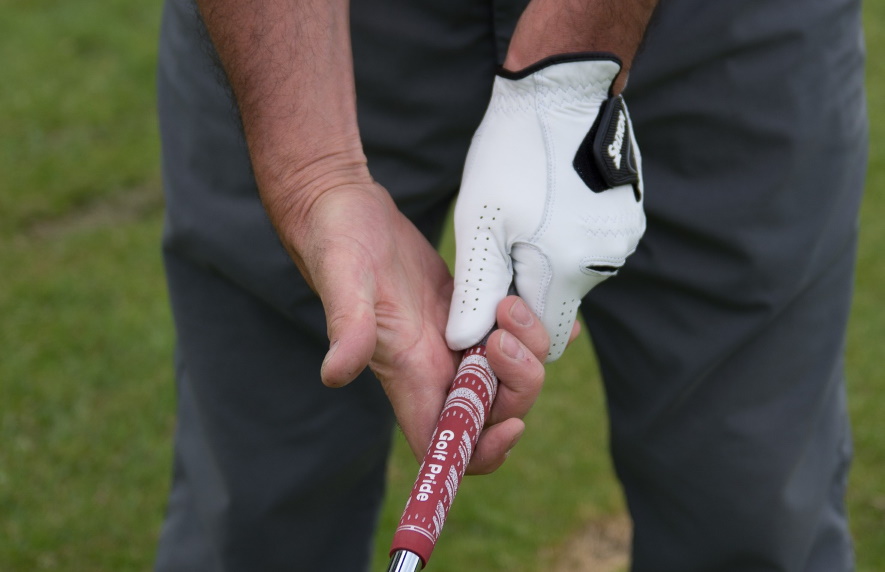
For beginner golfers who are getting used to holding the club in their hands, it’s important to start off on the right foot when it comes to how the driver feels through the swing and how it feels at impact.
The weight of the club should feel balanced, but more than that, it should not be too heavy or too light, as both situations will negatively impact your performance.
You ideally want the driver impact to feel solid and like the ball is exploding off the face. This will tend to give you more confidence and increase your speed through the shot. A hollow or “tinny” sound can work against this.
You also need to consider how much the feel degrades as the impact moves away from the sweet spot towards the mis-hit regions. Most beginners will prefer the feel to be as consistent as possible across the face, and in fact, most game-improvement drivers are designed for this.
However, the downside of consistent feel is reduced mis-hit feedback, which means it becomes more difficult for you to tell where the face makes contact with the ball. Achieving a balance that you’re satisfied with will go a long way.
4. Looks
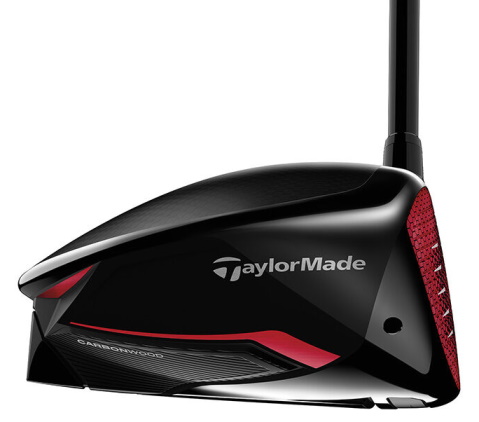
Another factor worth considering is how the driver looks. Aesthetic is one thing, but if you play a driver that doesn’t suit your eye, you’ll probably be less likely to make a good swing.
Many beginners appreciate the confidence that a large 460 CC head with an elongated crown provides.
Related to this are adjustability features, the main ones being movable sole weights and adjustable hosels. These allow you to alter the loft & lie, introduce draw bias, or add stability depending on the position of the weights.
Adjustability is very beneficial in drivers because it gives you the opportunity to dial in a setting that works best for you, even if you might not have been seeing great performance initially. However, it does tend to come at the cost of less forgiveness because of the added weight.
5. Shaft
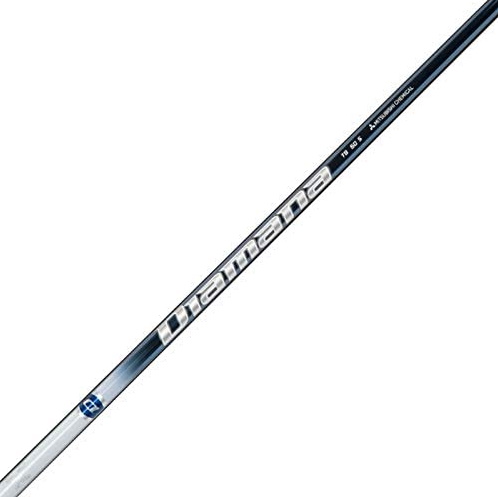
The shaft can make or break your success with a driver because of how much it influences swing weight, feel, trajectory and spin.
Graphite shafts have pretty much become the standard for today’s drivers (as opposed to steel shafts) because their increased torque, increased flex, and lighter weight help promote launch and speed.
Having said that, choosing the right shaft is a highly individual matter. These days, manufacturers pair modern drivers with one or more stock shaft options that tend to appeal to a wide range of golfers, but custom shafts are usually available as well.
The two main things to keep in mind when choosing a shaft are the weight and the flex.
If a shaft is too heavy for you, it will likely result in less control, less club head speed, and an excessively low launch. If a shaft is too light for you, it can result in excessively high launch and spin as well as a lack of precise contact with possible deceleration in the downswing.
The shaft flex that suits you is generally dependent on your swing speed, with lower swing speeds calling for more flex and higher swing speeds calling for less flex.
Playing a flex that doesn’t match your swing speed can result in sub-optimal ball flights. But if you’re in doubt, it’s always better to err on the side of more flexibility.
Beginners shouldn’t worry too much about shaft flex when getting their first driver because they don’t know what swing speed they will eventually settle into. Over time, they will start to understand what flex gives them the best results.
6. Price

Drivers are pretty expensive these days and the prices seem to rise with every new season. Fortunately, there are many affordable options out there.
As a general rule, the older the driver model, the better the deals you can find on it. And it’s not at all uncommon to find that you perform better with a $300 driver than a $600 driver.
Because beginners are just starting out, they usually need to learn how to make decent contact with the ball before they can gain a better idea of what type of driver is best for them. This is why they should not overspend on their first driver, but rather get something within a reasonable budget and see how their needs evolve with time.
In this guide, we have included driver models that span a range of different prices and brands. But the great thing is that there are ways to reduce both the final cost and risk of the purchase.
For example, one of our top recommended online golf equipment stores, Global Golf, offers club trade-ins as well as a program called Utry that lets you try a driver before you buy it. There has never been this much allowance for finding your ideal clubs, and you should take advantage.
Conclusion
A reliable, quality driver can be a huge boon to a golfer’s toolkit. Finding a model that does the job you want it to do as a beginner is certainly possible with a little bit of research.
At the end of the day, beginners should work within their budget, and beyond looking for decent forgiveness, launch, and light weight, they should not overthink which driver to play.
Once a beginner has settled into their swing, they can think about upgrading depending on their own individual needs.
Each of the driver models reviewed above deliver exceptional performance. We’ve given you the information you need to make a decision; now it’s up to you to go the rest of the way.
It is highly recommended to read consumer and professional reviews to acquire some useful insights as to how a driver actually performs. This will help you a lot in the decision-making process.
Thanks for reading this guide. Which driver are you interested in as a beginner? Do you have any questions? Feel free to leave a comment down below.
The post 8 Best Golf Drivers For Beginners – 2026 Reviews & Buying Guide appeared first on Golfstead.
Learn More About Golf
If you want to learn more about golf, check out these other helpful resources!
- Some Drills For Hitting The Golf Ball Solid – Improve Your Ballstriking

- Srixon ZXi4 Irons Review – Confidence in Every Swing
- Callaway 2015 Chrome Soft Golf Ball Review – Oh So Soft!
- How To Hit Out Of The Bunker – What You Need To Know

- 15 Best Golf Launch Monitors – 2026 Reviews & Buying Guide
- What Is A “Handicap” In Golf? – Explained



Popular Buying Guides