
Your ability to hit the ball solidly off the tee, send it a long way, and (hopefully) find the fairway is essential to your success as a golfer. It’s important to use a quality driver that suits your swing and your style of play.
Narrowing down a driver that would suit all mid handicappers isn’t easy since every player is different. However, you could say that a typical mid handicapper might have a driver swing speed of 88-100 mph and appreciate some combination of game improvement and better-player performance.
Whatever the case may be, there are countless options on the market, which can make the process of choosing the best driver for you feel difficult and overwhelming. Fortunately, you’ve come to the right place.
In this guide, we’ll review and compare our picks for the best golf drivers for mid handicappers across a range of different brands. These drivers may have been released for the most current golf season or any year prior.
Note: Golfstead has tested and/or conducted in-depth research into all of the products featured in this guide. Our editorial process for these rankings takes into account a mix of many factors which may include performance, reliability, usability, value for money, cost, and the general consensus from other users of the product. The list that follows may be reassessed or updated over time. We do not guarantee that other users will have the same or similar experience with the products as described on this page.
Our Top Picks For Drivers For Mid Handicappers
Based on our own testing, research, and experience, here are our top selections:
- Callaway Elyte Driver
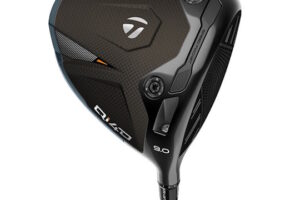
- TaylorMade Qi35 Driver
- PING G440 MAX Driver
- PXG 0311 Black Ops Driver
- Cobra DS-ADAPT X Driver
- Cleveland Launcher XL 2 Driver
- PING G440 LST Driver
- Titleist GT2 Driver
Note: Prices for the items listed on this page are subject to change. To see the current price, please click on the relevant links below.
1. Callaway Elyte Driver

Callaway is a top golf equipment brand that has developed high-performing drivers for decades and boasts a number of high-profile pro golfers as ambassadors.
Their Elyte driver takes speed and forgiveness to unprecedented levels with a new Ai 10x Face, Thermoforged Carbon Crown, and aerodynamic head shape. The adjustability and exceptional overall performance make it an ideal choice for mid handicappers.
This driver has a high average rating on the Callaway store and won a gold medal on the 2025 Golf Digest Hot List. Its key technologies are:
- Ai 10x Face: replacing the Ai Smart Face found in previous Callaway drivers, this face technology delivers 10 times more control points, further enhancing performance across the face. The results is higher ball speeds, tighter dispersions, and better optimized spin and launch.
- Thermoforged Carbon Crown: a new aerospace-grade carbon fiber crown allows the center of gravity (CG) to be positioned optimally for low spin and high launch. It also works with the unique shape of the driver to deliver unprecedented speed and distance.
- Elyte Shape: a new aerodynamic shape, developed through advanced prototyping, consists of a lower heel section and lower crown profile. It’s designed to minimize air resistance and maximize speed through the entire swing.
- Discrete Weighting System: a new discrete perimeter weighting system with a 13g movable weight. The system has fade, neutral and draw positions.
The stock graphite shafts are the Project X Denali Charcoal 50 & 60 and Mitsubishi VANQUISH PL 40. The stock grip is the Golf Pride Tour Velvet 360. Custom options are available.
| Lofts | 9°, 10.5°, 12° |
| Lie | 57° |
| Length | 45.75″ |
| Hand | RH/LH (9°, 10.5°), LH (12°) |
Pros
- longer and more forgiving than the original Paradym driver
- high launch and low spin
- healthy amount of workability
- simplified perimeter weighting system
- frames the ball nicely at address
- aesthetic has a cohesive colour scheme
Cons
- some prefer a more muted sound at impact
- distance gains over predecessor are marginal
Final Thoughts
After reviewing Callaway’s Elyte driver, we feel it would appeal to golfers across the skill spectrum who are seeking the next generation of speed off the tee along with forgiveness, workability, and sleek looks.
There’s no doubt that this is Callaway’s fastest driver yet, and we actually think that more mid handicappers will potentially gravitate towards it than any other category of golfer.
2. TaylorMade Qi35 Driver

The Qi35 is the middle model in TaylorMade’s Qi35 family of drivers, designed to provide a blend of forgiveness and distance.
With the Qi35, TaylorMade carries forward their latest cutting-edge technologies including the Infinity Carbon Crown and Carbon Twist Face, but makes several enhancements and introduces new innovations such as a “near-zero” CG projection.
The key technologies of the driver are:
- Near-Zero CG Projection: TaylorMade’s engineers have lowered the driver’s balance point, and hence the CG projection, to unprecedented levels, hence the term “near-zero”. The intent of this is for a larger area of the face to produce the high-launch and low-spin flight that leads to the longest drives.
- Multimaterial construction: the driver is made of tungsten, steel, chromium carbon, titanium, and aluminum, all of which contribute to a complete performance package.
- Trajectory Adjustment System: two interchangeable weights, one in the back (13g) and one in the front (3g) of the sole, can be swapped to alter the CG and flight characteristics. With the heavier weight back, you get the most stability, MOI and forgiveness; with the heavier weight forward, you get lower spin.
- Infinity Carbon Crown: this special carbon crown design extends virtually all the way to the top line to cover nearly all of the top of the driver, enabling weight savings that are redistributed to increase MOI.
- Thru-Slot Speed Pocket: this flexible pocket increases sole flexibility, leading to increased ball speed and forgiveness low on the face.
- Carbon Twist Face: 60 layers of carbon sheets are strategically arranged to maximize energy transfer and ball speeds in all regions of the face.
The stock graphite shafts are the Fujikura VENTUS Blue and Mitsubishi Diamana T+. The stock grip is the Golf Pride ZGRIP. An adjustable loft sleeve is included.
| Lofts | 9°, 10.5°, 12° |
| Lie | 56°-60° |
| Length | 45.75″ |
| Swing Weight | D3 |
Pros
- more forgiving than the Qi10
- great launch
- sole and hosel adjustability
- amazing looks with alternative colour option
- powerful feel
Cons
- the marketing material for the driver could be better
- has the same large footprint as the Max model
Final Thoughts
TaylorMade’s Qi35 driver produces similar ball speed and distance numbers to the previous generation Qi10, but it has better forgiveness (owing, in part, to the lowered CG projection) and more adjustability.
This makes it more accessible to golfers. Its balanced performance, with distance, forgiveness, mid-low spin and some workability, makes it an attractive option for many mid handicappers.
3. PING G440 MAX Driver

PING is a world-renowned golf equipment manufacturer that was founded in 1959 by Karsten Solheim, a former General Electric engineer. It’s backed by a slew of pros including Bubba Watson, Louis Oosthuizen, and Lee Westwood.
Their G440 MAX driver has incredible forgiveness, and our tests indicate that it has a slight performance edge over the G430 MAX. At the same time, the lighter configuration with a longer 46″ shaft helps foster more clubhead speed, a higher launch, and more carry.
The key technologies of the G440 MAX are:
- Carbonfly Wrap Crown: this saves discretionary weight which is reallocated to lower the CG, leading to increased MOI and a more muted, pleasant impact sound.
- Free Hosel: weight is removed from a section of the hosel and reallocated to lower the CG to record levels — the result is more distance and forgiveness.
- Low Face: the height of the G440 MAX’s face is lower than previous models, which enables it to be thinner and hotter for higher ball speeds across the face.
- Tungsten Backweight: a 29-gram backweight can be moved into neutral, draw or fade positions for ball flight adjustability.
- Trajectory Tuning 2.0 Hosel: this lightweight, aerodynamic, adjustable hosel offers eight loft and lie combinations to fine-tune your trajectory.
There are many stock shaft options offered at no upcharge including the PING Tour 2.0 Chrome 65, Mitsubishi TENSEI 1K Black 65, and Project X Denali Red.
| Lofts | 9°, 10.5°, 12° |
| Lie | 58.5° |
| Length | 46″ |
| Swing Weight | D3 |
Pros
- truly exceptional forgiveness
- straight ball flight
- significantly improved sound and feel compared to older models
- easy launch
- adjustable ball flight
Cons
- expensive
Final Thoughts
The PING G440 MAX can be a fantastic choice for mid handicappers who want to hit fairways more consistently off the tee while maximizing distance.
Most people won’t have any trouble getting the ball airborne, and the feel and sound are among the best of any PING driver.
We really can’t find anything to criticize about this club. It does what it’s supposed to do as a game-improvement driver, although it’s worth noting that the performance gains over the G430 MAX are minor at best.
4. PXG 0311 Black Ops Driver

PXG is a golf equipment manufacturer that was founded in 2014 and has quickly gained a foothold in the industry. It has been supported by a slew of pro golfers including Zach Johnson and Jason Kokrak.
The 0311 Black Ops model is a versatile driver built for high launch & low spin as well as extreme power and forgiveness. PXG has innovated to unlock the best performance of any PXG driver yet.
The technologies of the 0311 Black Ops driver include:
- AMF: short for Advanced Material Face, this high-strength, flexible titanium alloy face produces superior face deflection, higher launch, and lower spin compared to the 0311 GEN6. A non-uniform bulge and roll profile optimizes forgiveness and overall performance across the entire face.
- Carbon Fiber Crown & Sole: the crown and sole inserts are made of a high-strength, high-grade carbon fiber pre-preg that is just 0.03″ thick. This allows for weight savings which are redistributed to the perimeter of the clubhead, pushing the CG low and back, increasing MOI, and improving forgiveness.
- Precision Weighting: a special structure consists of three weights (two 2.5g and one 12.5g) strategically placed in the perimeter of the clubhead and anchored to the outer wall. These weights are interchangeable and can be used to add draw or fade bias or increase stability. Depending on the configuration, MOI can reach upwards of 10000g/cm².
- Natural Frequency Optimization: the natural resonances and vibrations of the driver have been fine-tuned to create the most desirable feel and sound possible.
PXG offers a selection of shafts for the 0311 Black Ops at no additional charge including ones from Mitsubishi and Project X. The stock grip is the PXG Lamkin Z5 High Performance.
| Lofts | 8°, 9°, 10.5°, 12° |
| Lies | 60° |
| Length | 45.5″ |
| Head Mass | 203g |
Pros
- a versatile all-rounder
- feel and sound are just right
- premium, modern looks
- spin is lower than the 0311 GEN6
- forgiveness is fantastic
Cons
- expensive
- a fitting is recommended to get the most out of the driver
Final Thoughts
The PXG 0311 Black Ops driver is a true gem that doesn’t really have any weaknesses. Golfers of any skill level, including mid handicappers, can have great success with it.
Whether it’s competitive distance, high launch, low spin, outstanding forgiveness, a pleasing feel, or a look that most people will love, this driver either matches or outclasses the previous GEN6 model in every category that counts.
5. Cobra DS-ADAPT X Driver

Cobra Golf is another golf equipment manufacturer that has some big names behind it, including Rickie Fowler and Gary Woodland.
Their DS-ADAPT X driver can be considered the middle model in the DS-ADAPT line, providing a blend of distance, forgiveness, launch and trajectory. Part of this is a new adaptive weighting system and new FutureFit33 hosel adapter which makes the DS-ADAPT the most adjustable Cobra driver ever.
An advanced aerodynamic design maximizes clubhead speed, and interchangeable weights in the sole (one back and one forward) allow golfers to increase forgiveness or reduce spin as desired. Key features are:
- Advanced Aero Design: the aerodynamic design of the DS-ADAPT X minimizes air resistance through the swing while maintaining a more traditional clubhead shape.
- Internal Adaptive Weighting System: a forward-positioned PWR-BRIDGE in the 9° driver reduces spin and increases ball speed for max distance, while weight concentrated in the back in the 10.5° driver increases stability and launch.
- H.O.T Face Insert: the thickness of the face is optimized in multiple locations for more consistent spin and increased ball speeds across the face. With the DS-ADAPT, the H.O.T face insert is larger for even more ball speeds than the DARKSPEED.
- FutureFit33: this new adjustable hosel system allows you to get more granular than ever before. It features 33 unique loft and lie settings that can be adjusted by ±2 degrees, and the face angle remains square in each setting thanks to a new SMARTPAD design.
Several premium aftermarket shafts are available for the DS-ADAPT X. The stock shaft options are the Project X Denali Black/Blue 60, Project X Denali Red 50, Fujikura PRO Black 60, and Mitsubishi TENSEI AV Blue 60. The stock grip is the Lamkin Crossline 60R.
| Lofts | 9°, 10.5° |
| Lies | 57°, 58° (adjustable) |
| Length | 45.50″ |
| Swing Weights | D2, D3.5, D4 |
Pros
- fantastic adjustability (hosel and sole)
- very forgiving and accurate
- versatile
- superb smooth feel
Cons
- look behind the ball won’t be to everyone’s tastes
Final Thoughts
The Cobra DS-ADAPT X is an awesome driver, with length, forgiveness, a balanced trajectory and low spin. The dark finish will appeal to many golfers, and the feel is fantastic.
Perhaps the greatest strength of this driver is its powerful adjustability, between the unique FutureFit33 hosel and interchangeable sole weights. Whatever your shot tendencies are as a mid handicapper, you have a great chance of finding the perfect setting for you.
6. Cleveland Launcher XL 2 Driver

Cleveland Golf is known to manufacture excellent golf clubs and offer them at relatively affordable prices.
Their Launcher XL 2 model is designed for distance and forgiveness with a mid launch and spin. It’s most recommended for players with a moderate-fast swing speed of around 90-100 mph.
This driver builds on the first generation of the Launcher XL by introducing a new, optimized MainFrame XL face and reworked head design with a low & deep CG. Players also benefit from distance-enhancing tech and an internal grip weight.
The key features of the Launcher XL 2 driver are:
- MainFrame XL Face: this new variable-thickness design takes into account the most common impact points over thousands of shots and optimizes face thickness. This effectively increases the size of the sweet spot and improves ball speed preservation across the entire face.
- XL Head: this design has been refined from the previous generation. A very thin crown supported by a strong, light framework enables weight savings which can be placed low and deep in the clubhead, further improving forgiveness and optimizing launch and spin.
- Rebound Frame: more energy is transferred to the ball from two zones of flexibility and rigidity which activate simultaneously upon impact.
- Action Mass CB: an internal 8g weight at the end of the grip is designed to make the club feel lighter and improve balance and control.
The stock shaft is the Mitsubishi TENSEI AV Series Blue 55, and the stock grip is the Lamkin Crossline 360. An adjustable hosel allows golfers to tweak loft and lie settings.
| Lofts | 9°, 10.5°, 12° |
| Lies | 58.5°, 60°, 58.5° |
| Length | 45.5″ |
| Swing Weights | D2, D3 |
Pros
- great all-rounder
- neutral ball flight
- excellent forgiveness
- more affordable than most name brand drivers
- solid feel with great sound
Cons
- might not perform well for many slower swingers
- no movable sole weight
Final Thoughts
Those mid handicappers looking for plenty of forgiveness and great all-around performance can’t go wrong with the Cleveland Launcher XL 2. It’s still relatively affordable compared to modern name brand drivers, coming in at less than $500.
If you prefer a draw bias with more launch and spin, we suggest taking a look at the Launcher XL 2 Draw.
7. PING G440 LST Driver

PING’s G440 LST driver is geared towards faster swingers who want to keep their spin down to maximize distance off the tee. A hot face, lighter configuration, and longer 46″ shaft helps foster more clubhead speed while preserving forgiveness.
The key technologies of the G440 LST are more or less the same as the MAX model:
- Free Hosel: weight is removed from a section of the hosel and reallocated to lower the CG to record levels — the result is more distance and forgiveness.
- Carbonfly Wrap Crown: this saves discretionary weight which is reallocated to lower the CG, leading to forgiveness and a more muted, pleasant impact sound.
- Low Face: the height of the G440 LST’s face is lower than previous models, which enables it to be thinner and hotter for higher ball speeds across the face.
- Tungsten Backweight: a 29-gram backweight can be moved into neutral, draw or fade positions for ball flight adjustability.
- Trajectory Tuning 2.0 Hosel: this lightweight, aerodynamic, adjustable hosel offers eight loft and lie combinations to fine-tune your trajectory.
There are many stock shaft options offered at no upcharge including the PING Tour 2.0 Chrome 65, Mitsubishi TENSEI 1K Black 65, and Project X Denali Red.
| Lofts | 9°, 10.5° |
| Lie | 57° |
| Length | 46″ |
| Swing Weight | D4 |
Pros
- forgiving and accessible for a low-spin driver
- better feel than the G430 LST
- impressive performance low on the face
- great customer support
Cons
- doesn’t generate the uber low-spin that some with elite swing speeds might be looking for
- marginal performance gains compared to last generation
Final Thoughts
The PING G440 LST may be a low-spin driver, but it’s one of the most accessible and forgiving low-spin drivers on the market. This makes it a good option for many mid handicappers who have above-average swing speeds.
The driver will help you maximize distance off the tee, and aside from the fact that the performance gains over the G430 LST are minor at best, we really can’t find anything to criticize about this club.
8. Titleist GT2 Driver

You may think of Titleist as mainly catering to the professional crowd, but this isn’t really true; they also offer plenty of options suitable for mid and high handicappers that live up to the Titleist standard of quality.
The goal of their GT2 driver is to provide maximum performance at every impact point on the face, meaning ball speeds, stability and forgiveness. This is unapologetically a game-improvement driver, designed to inspire confidence in every swing for golfers who don’t find the center of the face every time.
The features of the GT2 driver are:
- Thermoform Crown: this unique composite crown made from a new proprietary matrix polymer saves significant weight in the crown which is reallocated to optimize performance. At the same time, this new crown maintains the sound and feel golfers have come to expect from Titleist.
- Split Mass Construction: the internal weighting of the GT2 focuses mass towards the back of the clubhead for increased MOI, and low and forward to add speed and flight penetration.
- Speed Ring VFT Face: this technology combines an upgraded titanium Speed Ring, which stabilizes the perimeter to increase ball speeds in the center of the face, with a variable face thickness (VFT) design that maximizes speed across the entire face.
- Aerodynamic Improvements: sharper contours in a refined head shape that is enabled by the GT2’s new technologies work to minimize air resistance and maximize clubhead speed.
- Complete Adjustability: an interchangeable back weight that alters swingweight combines with an integrated SureFit hosel that enables sixteen unique loft and lie combinations. This gives you plenty of room to fine-tune your ball flight.
The featured shafts for the GT2 are the Mitsubishi TENSEI 1K Black & Blue, Project X HZRDUS Black 5G, and Project X Denali Red. The stock grip is the Titleist Universal 360. Many premium shafts are also available.
| Lofts | 8°, 9°, 10°, 11° |
| Lie | 58.5° |
| Length | 45.50″ |
| Hand | RH/LH |
Pros
- the most forgiving Titleist driver yet
- quiet sound with responsive feel
- classic, clean, understated looks
Cons
- ball flight may be too high for faster swingers
Final Thoughts
You might think the Titleist GT2 is geared towards high handicappers, but in fact, the driver is designed for golfers of all skill levels. It’s actually very popular on Tour and has been in the bag of top pros such as Justin Thomas and Adam Scott.
The GT2 driver is a pretty significant departure from the previous TSR2, both in terms of technology and performance. This is unusual as most drivers today only offer marginal changes from their predecessor.
Having said that, this is Titleist’s best game-improvement driver yet, so we highly recommend giving it a try.
Buying Guide
There are many drivers on the market, and knowing which one to choose as a mid handicapper (say, between 10 and 18 handicap) isn’t necessarily easy, especially if you’re not sure what to look for. This guide will provide you with the education you need in that regard.
In general, you should choose a driver that provides a healthy amount of distance and forgiveness off the tee. If you want to find the right driver, here are the most important factors to consider:
1. Distance

Of course, every golfer wants more distance off the tee, and mid handicappers are no exception. A longer drive will enable you to hit shorter, more precise shots into the green.
Even if you miss the fairway, it turns out that distance contributes more to strokes gained driving (about 60%-65%) than accuracy does. So, however you slice it, distance is hugely important, especially in a world of lengthening golf courses.
Most modern drivers have distance as their primary focus. The two main quantities that lead to more distance are ball speed and club head speed.
Ball speed is the speed of the ball immediately after impact with the club face. Obviously, higher ball speed results in more distance. One of the primary factors that affect ball speed is a number called the coefficient of restitution, or COR.
COR is a measure of how much energy is transferred from the club to the ball at impact. The higher the COR, the higher the ball speed. The value can technically be between 0 and 1, but current USGA rules prohibit it from being any higher than 0.83 in golf clubs.
Club head speed is the speed of the club at the moment of impact. Manufacturers typically increase this through certain club aerodynamics which allow the club to move faster and more efficiently through the air.
In short, driver manufacturers strive to maximize COR across the club face and optimize aerodynamics to maximize speed. For the longest drivers, they also try to minimize spin which further increases distance.
2. Forgiveness
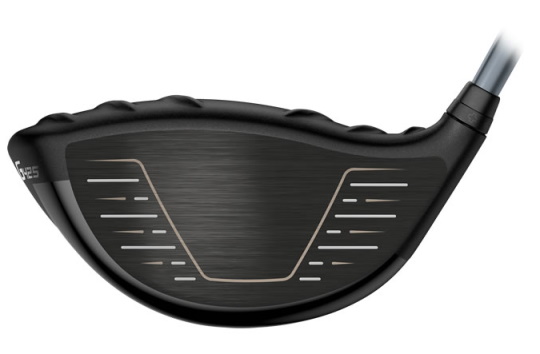
Forgiveness is certainly one of the most important factors to consider for a mid or high handicapper who doesn’t always make contact with the center of the face.
Having a degree of forgiveness in your driver is highly beneficial because at these high swing speeds, minor mis-hits can be amplified into very poor results. Avoiding the rough as much as possible will make a big difference in your scoring.
Forgiveness can be divided into two subtypes: ball speed forgiveness and directional forgiveness.
Ball speed forgiveness refers to the amount of ball speed that is preserved in mis-hit regions (towards the toe or heel) relative to the center of the face. Most modern drivers strive to maximize speed across the entire face so that even moderate mis-hits might result in only a few yards of lost distance.
Directional forgiveness refers to how far a shot deviates from the target line when struck in mis-hit regions. This is closely related to a quantity called moment of inertia, or MOI.
The higher the MOI, the more the club is resistant to twisting at impact when the ball doesn’t make contact at the center of mass. The more the club (and hence the face) resists twisting at impact, the closer to the target line the ball will start and the less ball speed will be lost.
Many drivers have high MOI as a selling point. This will certainly add stability to your shots and help you find more fairways, but you tend to get slightly reduced distance and higher backspin as a tradeoff.
3. Looks
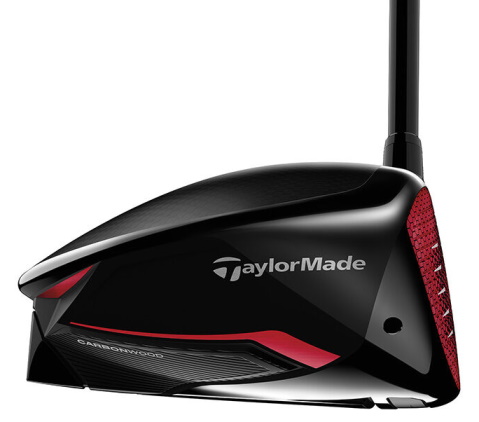
One factor worth considering is how the driver looks. Aesthetic is one thing, but if you play a driver that doesn’t suit your eye, you’ll probably be less likely to make a good swing.
Many mid handicappers prefer a large 460 CC head with an elongated crown and large face. This tends to inspire confidence when set up behind the ball. On the other hand, some mid handicappers prefer a more compact, pear-shaped head that allows for easier shot-shaping.
Related to this are adjustability features, the main ones being movable sole weights and adjustable hosels. These allow you to alter the loft & lie, introduce draw/fade bias, or add stability depending on the position of the weights.
Adjustability is very beneficial in drivers because it gives you the opportunity to dial in a setting that works best for you, even if you might not have been seeing great performance initially. However, it does tend to come at the cost of less forgiveness because of the added weight.
4. Feel
Another factor that can affect how likely you are to make a good swing is feel: specifically, how the driver feels through the swing and how it feels at impact. For some golfers who play by feel, this is imperative.
The weight of the club should feel balanced, but more than that, it should not be too heavy or too light, as both situations will negatively impact your performance.
When it comes to drivers, you ideally want impact to feel solid and like the ball is exploding off the face. This will tend to give you more confidence and increase your speed through the shot. A hollow or “tinny” sound can work against this.
You also need to consider how much the feel degrades as the impact moves away from the sweet spot towards the mis-hit regions. Most mid handicappers want mis-hit feel to be relatively forgiving, but with enough feedback to know where the ball made contact with the face.
There is a balancing act at play between consistent feel across the face and clarity of mis-hit feedback. Achieving a balance that you’re satisfied with will go a long way.
5. Shaft
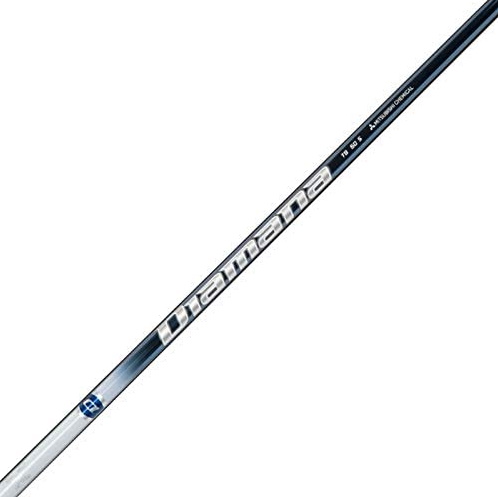
The shaft can make or break your success with a driver because of how much it influences swing weight, feel, trajectory and spin.
Graphite shafts have pretty much become the standard for today’s drivers (as opposed to steel shafts) because their increased torque, increased flex, and lighter weight help promote launch and speed.
Having said that, choosing the right shaft is a highly individual matter. These days, manufacturers pair drivers with one or more stock shaft options that tend to appeal to a wide range of golfers, but custom shafts are usually available as well.
The two main things to keep in mind when choosing a shaft are the weight and the flex.
If a shaft is too heavy for you, it will likely result in less control, less club head speed, and an excessively low launch. If a shaft is too light for you, it can result in excessively high launch and spin as well as a lack of precise contact with possible deceleration in the downswing.
The shaft flex that suits you is generally dependent on your swing speed, with lower swing speeds calling for more flex and higher swing speeds calling for less flex. Here’s a guideline:
| Driver Swing Speed | Suggested Shaft Flex |
|---|---|
| Greater than 105 mph | Extra Stiff |
| 96-105 mph | Stiff |
| 84-95 mph | Regular |
| Less than 84 mph | Senior or Ladies |
Playing a flex that doesn’t match your swing speed can result in sub-optimal ball flights. But if you’re in doubt, it’s always better to err on the side of more flexibility.
6. Price

Drivers are pretty expensive these days, with prices seemingly rising for every new season. Fortunately, there are still many affordable options out there.
As a general rule, the older the driver model, the better the deals you can find on it. And it’s not at all uncommon to find that you perform better with a $300 driver than a $600 driver.
You certainly don’t have to get a current-season driver. But the problem is that as time passes, availability of a particular model gets more limited, and eventually, you lose the ability to order it custom. At that point, you may only be able to get it used. In general, we don’t recommend drivers that are more than three seasons old.
In this guide, we have included driver models that span a range of different prices and brands. But the great thing is that there are ways to reduce both the final cost and risk of the purchase.
For example, one of our top recommended online golf equipment stores, Global Golf, offers club trade-ins as well as a program called Utry that lets you try a driver before you buy it. There has never been this much allowance for finding your ideal clubs, and you should take advantage.
Conclusion
A reliable, quality driver can be a huge boon to a golfer’s toolkit. Finding a model that does the job you want it to do as a mid handicapper is certainly possible with some research.
Mid handicap golfers can play many drivers successfully, but they tend to seek out game improvement drivers or drivers with both GI and better-player traits. This might mean a good amount of forgiveness, distance, solid feel, or a certain degree of workability.
The best way to find a driver that you do really well with is to simply try it. Buying it off-the-rack can work, but if possible, we recommend a fitting so that you understand what your best configuration is.
Each of the driver models reviewed above deliver exceptional performance. We’ve given you the information you need to make a decision; now it’s up to you to go the rest of the way.
It is highly recommended to read consumer and professional reviews to acquire some useful insights as to how driver models actually perform. This will help you a lot in the decision-making process.
Thanks for reading this guide. Which drivers are you interested in as a mid handicapper? Do you have any questions? Feel free to leave a comment down below.
The post 8 Best Golf Drivers For Mid Handicappers – 2026 Reviews & Buying Guide appeared first on Golfstead.
Learn More About Golf
If you want to learn more about golf, check out these other helpful resources!
- 5 Best Electric Golf Scooters – 2026 Reviews & Buying Guide
- 8 Best Golf Drivers For High Handicappers – 2026 Reviews & Buying Guide
- FlightScope Mevo Gen2 Launch Monitor Review – New, Lean & Affordable
- Square Golf Launch Monitor Review – A Budget Powerhouse
- Uneekor EYE XO2 Launch Monitor Review – Next-Level Measurement
- Some Great Short Putting Drills & Tips


Popular Buying Guides