
Irons are typically the most expensive part of your golf equipment, and this doesn’t change in the case of low handicappers.
If you have a handicap in the range of 1-10, this probably isn’t your first time buying a set of irons. You have likely already been gaming a set (often with added forgiveness) and are ready to take your equipment to the next level.
While you may have once prioritized distance and forgiveness, because your skill in the game has improved, these qualities are no longer as important.
Typically, low handicappers will want to prioritize control and workability but still maintain a certain amount of forgiveness for those occasional mis-hits. On the other hand, some low handicappers may want to feel secure with game-improvement irons geared towards mid or even high handicappers.
In this article, we’ll give you a few guidelines as to what you should look for in a low-handicap golf iron set, and also review and compare a few of the best irons on the market for low handicappers that were released for the most current golf season or any year prior.
Note: Golfstead has tested and/or conducted in-depth research into all of the products featured in this guide. Our editorial process for these rankings takes into account a mix of many factors which may include performance, reliability, usability, value for money, cost, and the general consensus from other users of the product. The list that follows may be reassessed or updated over time. We do not guarantee that other users will have the same or similar experience with the products as described on this page.
Our Top Picks For Irons For Low Handicappers
Based on our own testing, research, and experience, here are our top selections:
- Callaway Apex Pro 24 Irons
- TaylorMade 2024 P770 Irons
- Cobra 2025 KING Tec Irons
- Srixon ZXi7 Irons
- Callaway Apex MB 24 Irons
- PXG 0311 P GEN7 Irons
- Titleist 2023 T200 Irons
- PING Blueprint S Irons
Note: Prices for the items listed on this page are subject to change. To see the current price, please click on the relevant links below.
1. Callaway Apex Pro 24 Irons

If we had to recommend one iron out of all the iron models we’ve tested, it would be the Apex Pro 24 by Callaway.
Delivering a mix of forgiveness, distance and control, it’s ideally suited for a handicap range of around 5-13 and is the first Apex iron to pair a forged 1025 carbon steel body with a forged face as part of a hollow-body construction.
This iron is considered a “players distance” iron, with both game-improvement and players elements. It boasts a 5/5 (100% recommended) average customer rating on the Callaway store and won a gold medal on the 2024 Golf Digest Hot List.
Its key features and tech are:
- Progressive Face Design: a Forged 455 Face Cup is found in the 3-5 irons, which is designed to give a boost to distance and forgiveness, while the 6-PA irons feature a forged 1025 carbon steel faceplate designed for maximum consistency and scoring control.
- Multi-Material Construction: unlike the previous Apex 21, the Apex 24 pairs a forged 1025 carbon steel body with a forged face.
- Urethane Microspheres: a proprietary creation of Callaway that provide the vibration-absorbing benefits of urethane while still retaining a very high face COR. This works together with the multi-material construction to deliver a super soft, premium feel.
- Dynamic Sole: a pre-worn leading edge and trailing edge relief help maintain speed through the turf, thus helping you make more consistent contact for all different types of shots.
- MIM Back Weight: a metal-injection molded (MIM) back weight allows club fitters to find a swing weight that works best for you. It also allows for consistent visuals when building a mixed set with Callaway’s other Apex 24 models.
The stock shaft options are the True Temper Dynamic Gold Mid 115 (steel) and Mitsubishi MMT Taper Iron (graphite). The stock grip is the Golf Pride ZGRIP Firm. Custom options are available.
| Loft | 19°-50° (3-AW) |
| Lie | 60°-63.5° (3-AW) |
| Length | 35.5″-39″ (AW-3) |
| Offset | 1.3mm-3.4mm (AW-3) |
Pros
- exceptional distance control
- good launch in the long irons and great control in the short irons
- longer and more forgiving than a pure players’ iron
- better feel than the Apex Pro 21
- outstanding bag appeal
- does pretty much everything well
Cons
- very pricey
Final Thoughts
The Callaway Apex Pro 24 iron is a worthy successor to the Pro 21, with improved feel and sound, great distance and forgiveness, outstanding bag appeal, and workability that better players demand.
This iron really doesn’t do anything poorly. And it’s not a one-trick pony, as it gives you the length and forgiveness you need in the long irons as well as the touch and control you need in the short irons.
2. TaylorMade 2024 P770 Irons

Founded in 1979 by Gary Adams, TaylorMade has grown to become one of the most well-known and successful brands in golf.
The 2024 iteration of TaylorMade’s P770 iron puts elevated forgiveness, distance and feel in a compact players shape, and it’s engineered for even better feel and forgiveness than the 2023 model. The iron is ideal for low handicappers who want higher trajectories and more control into greens compared to typical “players distance” irons.
The fully forged 2024 P770 won a gold medal on the Golf Digest 2025 Hot List and enjoys a 4.9/5 (98% recommended) rating on the official TaylorMade store. Its key technologies are:
- FLTD CG (or ‘Flighted Center of Gravity’): a progressive CG that is lowest in the long irons for higher launch and higher in the short irons for more precise control.
- SpeedFoam Air: a proprietary, super-light urethane foam injected into the head, just behind the face, that is primarily designed to provide a premium feel and sound.
- Thru-Slot Speed Pocket: this pocket increases sole flexibility, leading to increased ball speed and forgiveness low on the face.
- a refined tungsten weight used to precisely position the center of gravity (CG) for more forgiveness than the 2023 model
- exacting mass optimization which improves performance across the board
- a thin top line and compact profile for a more appealing look to better players
The stock steel shaft is the True Temper Dynamic Gold Mid 115, and the stock grip is the Golf Pride ZGRIP Plus2.
| Loft | 19°-50° (3-AW) |
| Lie | 60.5°-64° (3-AW) |
| Length | 35.5″-39″ (AW-3) |
| Swing Weight | D2, D3 |
Pros
- solid forgiveness for an iron so slim and controllable
- better feel than the 2023 P770
- balanced trajectory
- superb workability
- clean, premium looks
Cons
- no significant performance gains over previous models
- long irons can be a bit challenging to get up in the air
Final Thoughts
The 2024 P770 is TaylorMade’s best P770 iron yet, particularly when it comes to the forged feel which can be described as both solid and soft.
For low handicappers who are looking for great forgiveness but also great control into greens, you can’t do much better than this model, especially if you prefer TaylorMade clubs.
3. Cobra 2025 KING Tec Irons

Cobra Golf was founded in 1973 by amateur golf champion Thomas Crow, and it has since grown to be one of the biggest brands in golf equipment, maintaining endorsement deals with many top pros.
Their 2025 KING Tec irons, which enjoy high ratings from customers, are engineered to deliver forgiveness, control, and a forged feel in a refined players shape.
Key features include:
- a PWRSHELL forged face cup technology that wraps over the sole of the iron, increasing launch and speed over the entire face. With the 2025 KING Tec, the PWRSHELL face is thinner than ever to produce even more ball speed.
- a H.O.T. Face engineered through CNC machining for more efficient spin and increased ball speeds across the face, not just in the sweet spot.
- a five-step forged 1025 carbon steel body and face for soft feel preferred by better players
- a hollow-body design
- a new foam filling which creates an elastic rebound effect that enhances feel and feedback
- 20g of tungsten positioned in the toe which optimizes the CG location and adds stability
- a sleeker design consisting of a thinner top line and reduced offset
The stock steel shaft is the KBS $-TAPER LITE, and the stock grip is the Lamkin Crossline. With a purchase of 2025 KING Tec irons, you’re also eligible to receive free Arccos Smart Sensors.
| Loft | 19°-49° (3-GW) |
| Lie | 60.5°-64° (3-GW) |
| Length | 35.75″-39.25″ (GW-3) |
| Offset | 1.5mm-3.9mm (GW-3) |
Pros
- attractive brushed steel finish
- clean aesthetic
- exceptional workability
- affordably priced
- fast and forgiving
- phenomenal feel and sound
Cons
- profile may be too slim for some
Final Thoughts
There is really nothing that the Cobra 2025 KING Tec iron does poorly. Distance, forgiveness, feel, workability, controllability, and looks are all there.
It’s worth noting that these irons are basically the same as the 2022 King Forged Tec, with a different cosmetic design and some small refinements made to the tech.
This gem of an iron, which is perhaps not as well-known as other models, could be a game-changer for low handicappers looking to game new clubs. However, we suggest steering clear of the Arccos sensors and instead looking at other options for performance analysis.
4. Srixon ZXi7 Irons

Many people are familiar with Srixon as one of the top manufacturers of golf balls. It turns out that they make excellent golf clubs too.
Srixon’s ZXi7 is a players’ iron with Tour shaping that offers a high level of control. With a thin topline, short blade, narrow sole, minimal offset, and muscleback cavity construction, it’s the most players-oriented model in the ZXi line, geared towards low handicappers.
The ZXi7 has been in the bag of some Tour players including Kevin Kisner and Shane Lowry.
Compared to its predecessor, the ZX7 Mk II, the ZXi7 is designed to improve on feel and get even more speed off of the face with new i-FORGED technology. The iron won a gold medal on the 2025 Golf Digest Hot List.
Key features of the ZXi7 include:
- i-FORGED: the ZXi7 irons are made via a Condensed Forging process using S15C steel for the face, which is 7% softer than the face of the ZX7 Mk II. The softer face material is made possible due to added strength in the hosel region.
- Tungsten Weighting: used to precisely position the center of gravity (CG) for optimal overall performance.
- PureFrame: a special ridge forged into the iron right behind the sweet spot results in a soft yet solid feel at impact with minimal vibrations. This ridge is larger and more expanded compared to the previous generation, resulting in better feel, control and stability.
- Tour V.T. Sole: a V-shaped sole, with higher bounce on the leading edge and lower bounce on the trailing edge, is designed to glide through the turf so that hitting behind the ball is much less penalizing.
- Progressive Grooves: grooves become sharper, narrower and deeper in the short irons and wedges (8-AW) in order to generate maximum spin and stopping power. The 3-7 irons have wider grooves designed for longer shots.
The ZXi7 irons come stock with the True Temper Dynamic Gold Mid 115 shaft. The stock grip is the Golf Pride Tour Velvet 360.
| Loft | 20°-51° (3-AW) |
| Lie | 60°-63.5° (3-AW) |
| Length | 35.75″-39.25″ (AW-3) |
| Offset | 1.4mm-3.7mm (AW-3) |
Pros
- feel is buttery soft
- excellent workability
- playable and consistent
- exceptional turf interaction
Cons
- some would like even more of a players’ look
- a little less forgiving than the ZX7 Mk II
Final Thoughts
The feel of the Srixon ZXi7 is noticeably softer than the ZX7 Mk II and one of the best feels we’ve ever experienced in an iron, rivaling Mizuno.
While we found it to be a bit less forgiving, the ZXi7 is simply an excellent iron that performs just as well as irons from popular name brands. The iron delivers the control and reliability that skilled golfers need, with enough forgiveness to not leave you out in the cold.
5. Callaway Apex MB 24 Irons

We know there are many low handicappers out there who want to play a blade, whether it’s the short irons, wedges, or the entire set. One of your best options in this case is Callaway’s Apex MB 24.
This iron has a forged muscleback blade construction geared towards the best players in the game, although low handicappers in the single digits can also do very well with it. It’s designed to provide the ultimate in workability, efficient turf interaction, and a classic feel.
Features include:
- One-Piece Forged: the body and face are shaped as one piece from 1025 carbon steel via a proprietary forging process, ensuring a premium, extremely pure feel.
- Progressive CG: the center of gravity (CG) of the Apex MB 24 becomes progressively higher as you move from the long to the short irons. This optimizes performance through the set, giving skilled players what they need for every shot.
- Dynamic Sole: a dual chamfer on the leading edge and trailing edge chamfer help maintain speed through the turf, thus helping you make more consistent contact for all different types of shots.
- MIM Back Weight: a metal-injection molded (MIM) back weight allows club fitters to find a swing weight that works best for you. It also allows for consistent visuals when building a mixed set with Callaway’s other Apex 24 models.
The Apex MB 24 irons are meant for custom fittings and thus do not have stock shafts or grips. For our review, we used the True Temper Dynamic Gold MID steel shaft and the Golf Pride ZGRIP. Custom options are available.
| Loft | 20.5°-50° (3-AW) |
| Lie | 60°-63.5° (3-AW) |
| Length | 35.5″-39″ (AW-3) |
| Offset | 0.6mm-2.2mm (AW-3) |
Pros
- phenomenal distance control
- surprisingly good forgiveness for a blade
- chamfered sole is a nice touch
- oodles of workability and control
- classic blade feel and look
Cons
- back aesthetic is a bit unorthodox which may not appeal to some
Final Thoughts
The Apex MB 24 is one of our favourite blade offerings, not just in terms of performance but also looks. Distance control, workability and feel are all top notch, and forgiveness is at least as good if not marginally better than the 2021 MB.
We suspect that low handicappers who are good enough to play the Apex MB 24 will gravitate towards the short irons and will fill out the longer irons with a more forgiving model like the Apex CB 24 or Apex Pro 24.
6. PXG 0311 P GEN7 Irons

PXG is a golf equipment manufacturer that was founded in 2014 and has quickly gained a foothold in the industry. It is backed by some high-profile PGA Tour professionals such as Zach Johnson and Joel Dahmen.
Their 0311 P GEN7 iron is all about blending workability and forgiveness. This iron introduces QuantumCOR technology and has an even thinner face than the previous generation, resulting in even higher COR and ball speeds.
Compared to the XP model in the 0311 GEN7 family, the P has considerably less offset and a slightly smaller head size. Key technologies include:
- QuantumCOR: this core material, in development for a decade, replaces the XCOR2 polymer filling of previous generations for even better performance. Its light weight reduces the mass of the core so that more weight can be placed low and around the perimeter for higher MOI.
- Variable Ultra-Thin Face: the face of the iron is just 0.05″ thick (15% thinner than the GEN5) and made from high-strength HT1770 maraging steel. Combined with the new QuantumCOR, this leads to a COR at the USGA limit and high ball speeds in mis-hit areas.
- Titanium Bezel: a lightweight titanium insert on the back of the iron enables weight savings which are redistributed to the perimeter of the club for increased MOI.
- Power Channel: this U-shaped imprint on the inside of the face improves face flexion in the top region, increasing ball speed and improving launch.
- 5X Forged: forged five times from 8620 soft carbon steel, increasing strength, groove life, feel and looks.
- Milled Back Surface: improves iron aesthetics without compromising performance.
You can choose from a range of stock or premium shafts and grips. Possible shaft options include the True Temper Dynamic Gold, KBS TOUR, and Mitsubishi MMT, and grip options include the Golf Pride and PXG Z5.
| Loft | 20.5°-49° (4-GW) |
| Lie | 61°-64° (4-GW) |
| Length | 35.5″-38.875″ (GW-4) |
| Offset | 0.04″-0.22″ (GW-4) |
Pros
- long and forgiving for a players’ iron
- good workability
- feel is solid but sound is soft and quiet
- sharp, premium, luxurious look
- unique dark finish available
Cons
- gains over the previous model are very minimal
Final Thoughts
The GEN7 is PXG’s best-performing 0311 P iron yet, although the differences between GEN7 and GEN6 are marginal.
While the spin is rather low for a players iron, much of this is compensated for in the form of higher launch, so stopping power is still good.
We recommend these irons for low handicappers who want control and workability but prioritize larger amounts of forgiveness. If you can handle the high cost of these irons and can access a custom fitting, there’s absolutely no reason not to give them a try.
7. Titleist 2023 T200 Irons

Titleist has long been known to cater to better players and professionals with many of their offerings, and their irons are no exception.
Their 2023 T200 model is classed as “the Tour’s distance iron”, engineered to provide a Tour-inspired look and feel with a Tour-level amount of precision and controllability, all while maintaining great distance and forgiveness.
The T200 has gone through several iterations, and while the 2023 version is very similar to the 2021 model, it makes a few welcome tweaks and refinements to the formula.
The main features of the 2023 T200 are:
- Tungsten Weighting: a dense D18 tungsten, which is put through an aerospace brazing process, optimizes the center of gravity (CG) so that the long irons launch high and long while the short irons are forgiving and accurate.
- Variable Bounce Sole: originally designed for the T100 iron with the help of pros and Vokey experts, the trailing edge of the iron has been softened to allow for even smoother turf interaction.
- Multi-Material Construction: a new dual taper forged face and Max Impact Technology enhanced polymer core work together to drastically increase speed across the face and improve feel. Plus, the chassis is now stiffer, and more tungsten has been added to the head.
Titleist offers a number of shafts for the 2023 T200 irons at no upcharge from brands such as Project X, Mitsubishi, KBS, and Nippon. The stock grip is the Titleist Universal 360.
| Loft | 21°-48° (4-PW) |
| Lie | 61.5°-64° (4-PW) |
| Length | 35.5″-38.5″ (PW-4) |
| Hand | RH/LH |
Pros
- good distance and solid forgiveness
- accurate, consistent and workable
- feel is not clicky or hollow
- high launch and great stopping power
- muscle plate gives it a players look
Cons
- feel is firm and relatively harsh on mis-hits
- too similar in performance to the 2021 model
Final Thoughts
The Titleist 2023 T200 irons are a fantastic option for low handicappers. They don’t really have any weaknesses; they’re consistent and reliable, they have solid forgiveness, and they look fantastic.
Having said that, the performance isn’t noticeably different from last generation, so if you own the 2021 or even the 2019 version, it may not be worth upgrading.
8. PING Blueprint S Irons

PING was founded in 1959 by Karsten Solheim, a former General Electric engineer, and is a manufacturer of some of the finest irons in golf.
Their Blueprint S is unapologetically a players’ iron. Designed for low handicappers and skilled players, it was developed through extensive testing from top Tour pros and is their first forged cavity-back iron to be released in a decade.
This slim-profile iron focuses on shotmaking precision and control with a side of forgiveness, particularly in the 3-5 irons.
A key feature is Precision-Pocket Forging. This is a special pocket forged into the 3-5 irons via a patented process, enabling weight savings which are redistributed to increase MOI and forgiveness. The pocket contains an elastomer insert designed to maintain a solid feel and good sound.
The Blueprint S sports a Tour-preferred look consisting of a thin topline, minimal offset, narrow sole, and shorter blade length. The machined grooves are engineered for optimal spin and launch.
The iron also has shaft tip weights and a high-density toe screw which allow for precise swing weight adjustments.
PING offers an array of steel and graphite shaft options for the Blueprint S including the KBS TOUR, PING Alta CB Black, True Temper Dynamic Gold, and Nippus N.S. PRO MODUS 3 Tour 105. The stock grips are the Golf Pride Tour Velvet 360 and Tour Velvet Cord.
| Loft | 19°-45° (3-PW) |
| Lie | 59°-64.1° (3-PW) |
| Length | 35.5″-39″ (PW-3) |
| Offset | 0.02″-0.17″ (PW-3) |
Pros
- forgiving yet looks and feels like a blade
- extremely consistent results
- surprisingly easy to hit
- smooth, butter-like feel
- tends to fit skilled players really well
Cons
- some dislike the large cavity aesthetic on the back
Final Thoughts
The PING Blueprint S iron is an incredible fit for many low handicappers, delivering the best in control, accuracy, feel, and reliability while being more forgiving than most other irons that are this Tour-oriented.
While the iron looks amazing at address, we’re personally not huge fans of the deep cavity design on the back and would have preferred a flatter geometry, although we understand that it’s part of what gives the iron its standout performance.
Buying Guide
As a low handicapper, when you’re looking to invest in an iron set that you can rely on to deliver, there are some key things that you should take into consideration.
1. Your Goals

Your performance goals will have a massive influence on the kinds of irons you should consider.
In particular, how much forgiveness versus controllability do you want in your iron? Do you want an iron with more of a balanced look and feel, do you want a very slim iron, or do you want to play it safe with a chunkier profile?
In general, low handicappers are expected to play irons that offer players performance (workability, stopping power, etc.) with some supportive distance and forgiveness on the side. But this certainly isn’t the only way to go.
Even tour players use game-improvement irons, particularly in the long irons, because they need the extra forgiveness and it’s easier to get the ball up in the air. In fact, at the skill level of a low handicapper, it can be a good idea to go game-improvement in the long irons and players in the short irons and wedges.
The bottom line is that you should match the kind of iron you play with your goals, whatever they may be.
2. Iron Style
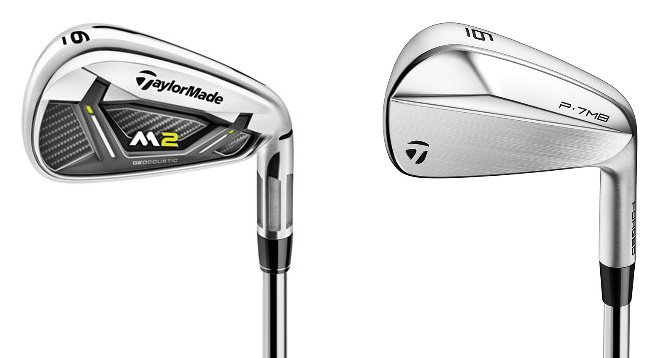
Irons normally come in two different styles: cavity back and muscle back.
The cavity back features a hollow construction on the back of the head that is ideal for amateur golfers since it offers a lot of forgiveness both in terms of accuracy and distance.
The muscle back lacks a cavity on the back, but it gives the golfer better feel and better control to shape shots. Hence, it is preferred by seasoned players who have the skill and experience to control their ball.
It’s also worth differentiating the manufacturing process. Cavity back irons are often cast, which means they are formed when hot metal is poured into a mould and cooled. Muscle back irons are typically forged, which means they are carved and shaped from a single solid piece of metal.
Muscle back irons are designed for the game’s best players, and even low handicappers may not be skilled enough to use them. But there are plenty of forged options that are suitable, and low handicappers can do well with cavity back irons as well.
There is another type of iron construction called hollow body. As the name implies, this means that the inside of the iron head beneath the surface is fully or partially hollow, instead of a solid piece of metal. Hollow bodies generally increase speed and forgiveness while maintaining more of a players’ look, making them a good potential option for some low handicappers.
3. Clubhead Size

Irons come is a variety of shapes and sizes. Low handicappers are better players and tend to prefer a smaller-sized club head because it allows for more touch, precision and control.
Medium-sized clubs are great for people who aren’t total hacks but are looking to improve their game, such as mid-handicappers.
Large club heads are very forgiving and give you the best chance of hitting a solid shot, making them ideal for high handicappers and newbies.
Of course, these rules aren’t set in stone, and any handicap can play any size clubhead they wish if it gives them the results they want.
4. Shaft
The shaft of an iron has a considerable influence on swingweight, feel, trajectory and spin. Choosing the right shaft is a highly individual matter.
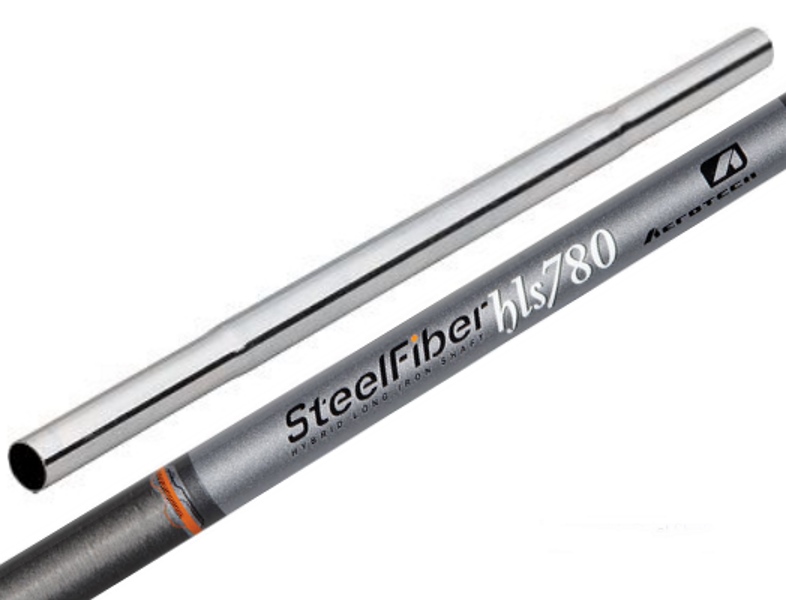
When you’re looking for a good iron set for your needs, pay attention to the shaft. Shafts are made out of two types of materials: graphite and steel.
Steel
If you’re strong enough or have a high enough swing speed, steel can be preferable because it is generally heavier and is less liable to deviate from the plane during the swing.
Graphite
Graphite shafts tend to be lighter and more flexible than steel shafts, but they are less common with irons than with woods and drivers.
For some low handicappers with slower swing speeds, graphite might be a good choice because it will allow them to generate more clubhead speed through the ball.
Another important factor related to the shaft is flex. It’s important to know which flex suits you best because it can make a big difference in your performance. In general, faster swing speeds call for a stiffer flex.
These days, there is not a clear cut answer as to whether golfers would benefit more from steel or graphite shafts. Professionals use both. You’ll have to figure out yourself whether you perform better with steel or graphite shafts.
5. Your Handicap

While a low handicap typically falls in the range of 1-10, where you are on that handicap range can give you a hint as to what type of iron you’d play best with.
For example, if you’re on the low end of the low-handicap range (around 1-3), you might opt for a full-blown blade or forged cavity back with high workability and a very slim profile.
On the other hand, if your handicap is closer to 10, you might choose a players-GI hybrid or a players iron with more forgiveness and distance.
6. Budget

The price of irons and golf equipment in general continues to go up due to inflation, supply conditions, and other factors.
These days, not everyone can afford iron sets that cost $1500+, and fortunately, there are options that cost well below this amount.
When it comes to irons, it’s not at all uncommon to find that you perform better with an $800 set than with a $2000 set. This is why, unless you have a big budget, you shouldn’t worry about an iron being “too cheap”.
There is a limit to this, though; if you’re looking for great performance, we wouldn’t go under $500 in terms of cost. Plus, many low handicappers who are serious about the game won’t mind dropping more money for irons that suit them.
Players irons often cost more than game-improvement irons, sometimes pushing $2000 or more for a full set. In this guide, we’ve included iron models across a range of prices, but the great thing is that there are ways to reduce both the final cost and risk of the purchase.
For example, one of our top recommended online golf equipment stores, Global Golf, offers club trade-ins as well as a program called Utry that lets you try an iron before you buy it. There has never been this much allowance for finding your ideal clubs, and you should take advantage.
Conclusion
A set of reliable, quality irons can be a huge boon to your golfing toolkit. Finding a model that does the job you want it to do as a low handicapper is certainly possible with some research.
There are many things to look out for. Some irons provide better control and feel, while others sacrifice some of this in order to provide better distance and forgiveness.
While it’s suggested that low handicappers game players irons because of their pure feel and workability, they could do well with other types of irons as well.
Each of the iron models reviewed above deliver exceptional performance. We’ve given you the information you need to make a decision; now it’s up to you to go the rest of the way.
We highly recommend reading consumer and professional reviews to acquire some useful insights as to how iron models actually perform. This will help you a lot in the decision-making process.
Thanks for reading this guide. Which irons are you interested in as a low handicapper? Feel free to share by leaving a comment below.
The post 8 Best Golf Irons For Low Handicappers – 2026 Reviews & Buying Guide appeared first on Golfstead.
Learn More About Golf
If you want to learn more about golf, check out these other helpful resources!
- How To Build An Indoor Putting Green – Step-By-Step DIY Guide

- 12 Best Golf Rangefinders – 2026 Reviews & Buying Guide
- How To Grip A Golf Club Properly – Read This Before You Swing!
- How To Hit The Golf Ball Higher – 6 Best Strategies
- Uneekor EYE MINI Launch Monitor Review – Power & Portability

- 6 Best Putting Greens With Ball Return – 2025 Reviews & Buying Guide

Popular Buying Guides